★ Click here to enter the Trout and Salmon crossword for the chance to win a Loop Z1 double-handed rod★

Carrowmore Lake and Mount Falcon
Rob Hardy and friends discover the angling delights of Ireland’s north-west, fishing County Mayo’s Carrowmore Lake and the River Moy at Mount Falcon
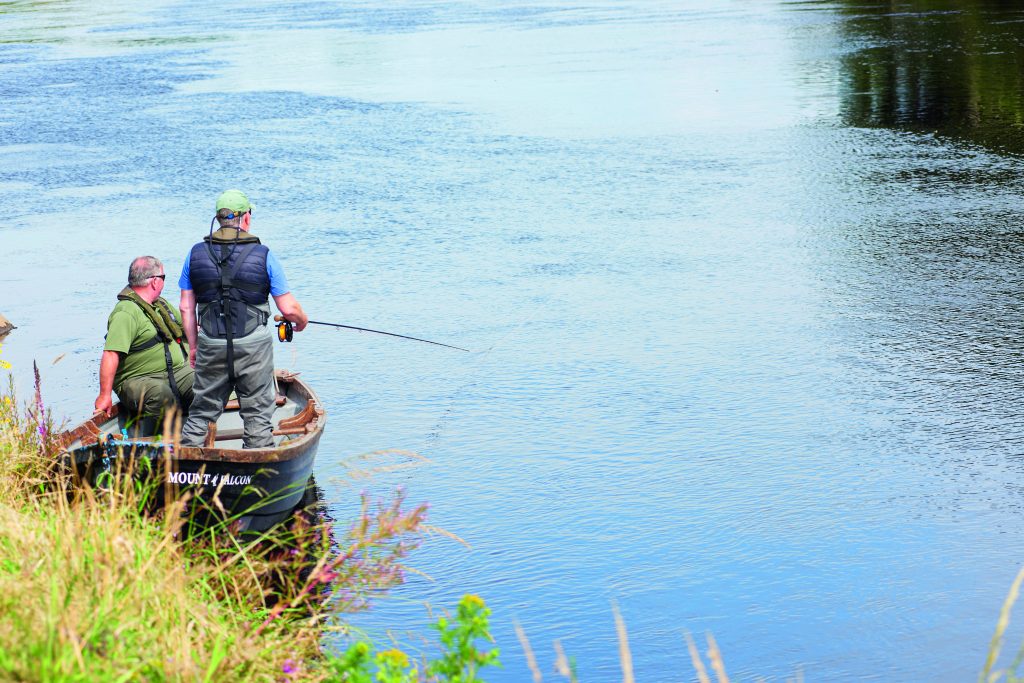
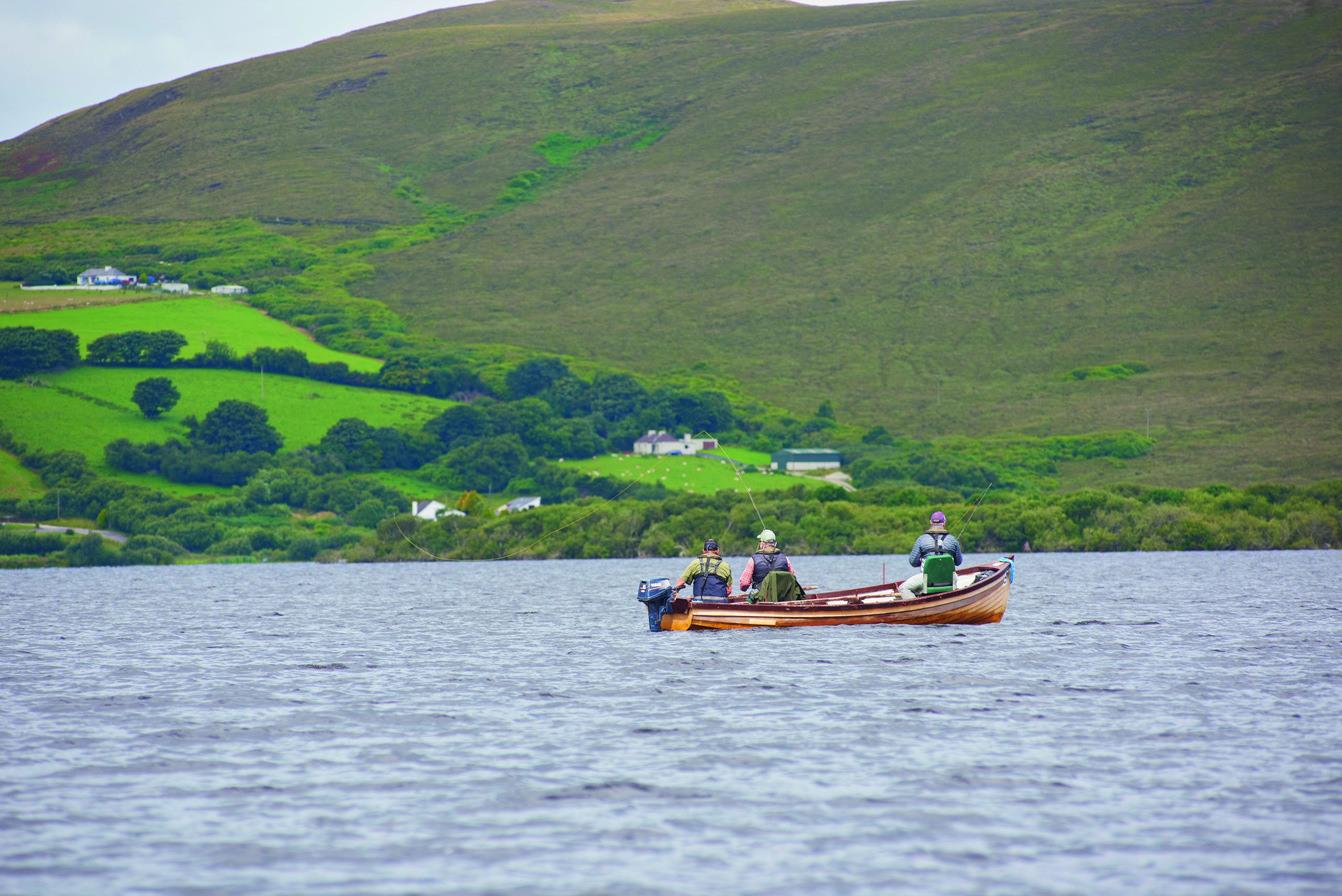 Drifting the open water shallows near Bog Bay

There are few finer sights in fly-fishing than a fish materialising from the depths, rising to engulf your top-dropper fly close to the boat and then, with a flash of silver or gold from its flank, vanishing once more into the depths. With a brown trout, it’s thrilling; the athletic dash of a sea-trout adds a burst of surprise and breathlessness to the moment. But imagine the sensation when that surface disturbance comes from the slow, dustbin-lid-sized boil of a fresh-run spring salmon. There are few stillwaters where such a spectacle can become reality, yet Carrowmore Lake in County Mayo, Ireland, ranks near the top of that exclusive list.
About Carrowmore Lake
Carrowmore covers nearly 2,300 acres, stretching four miles in length and three miles at its widest point. For its size, it is relatively shallow, averaging 6ft-12ft deep, and its lightly tinged water and peaty bottom sustains a surprisingly good pH level.
While all this is generally advantageous for visiting anglers, the lake can become heavily
coloured when stirred by strong winds and it often requires a few days of settled weather to recover clarity.
Today, the lake also provides the entire Erris area with drinking water. Ironically, the installation of a small dam at the mouth of the Munhin River during the 1980s – raising the lake’s level by around half to one metre to accommodate the supply – also dramatically improved the fishing. Local reliance on the lake is nothing new: its small ‘dot’ islands are known to have been inhabited during the Iron Age. No doubt Carrowmore offered an abundant supply of fresh water and fish even then. Perhaps it was the very same runs of salmon and sea-trout, ascending the Munhin River before continuing through to the Glencullin River, that sustained those early Irish settlers. These runs are now prized more for sport than sustenance.
Where to get permits and boats for Carrowmore Lake
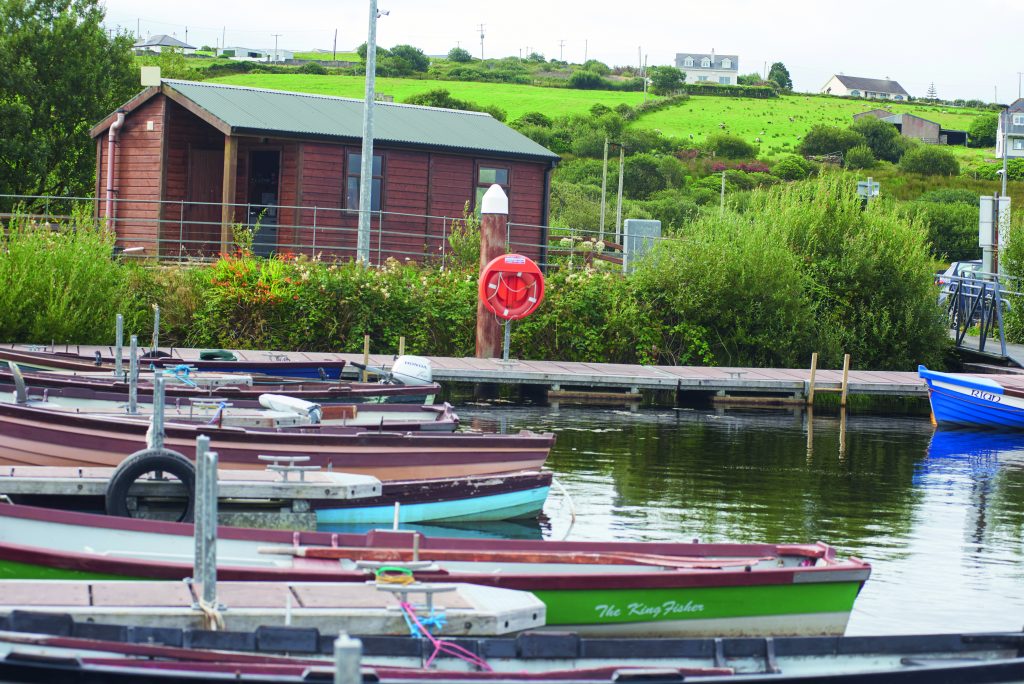
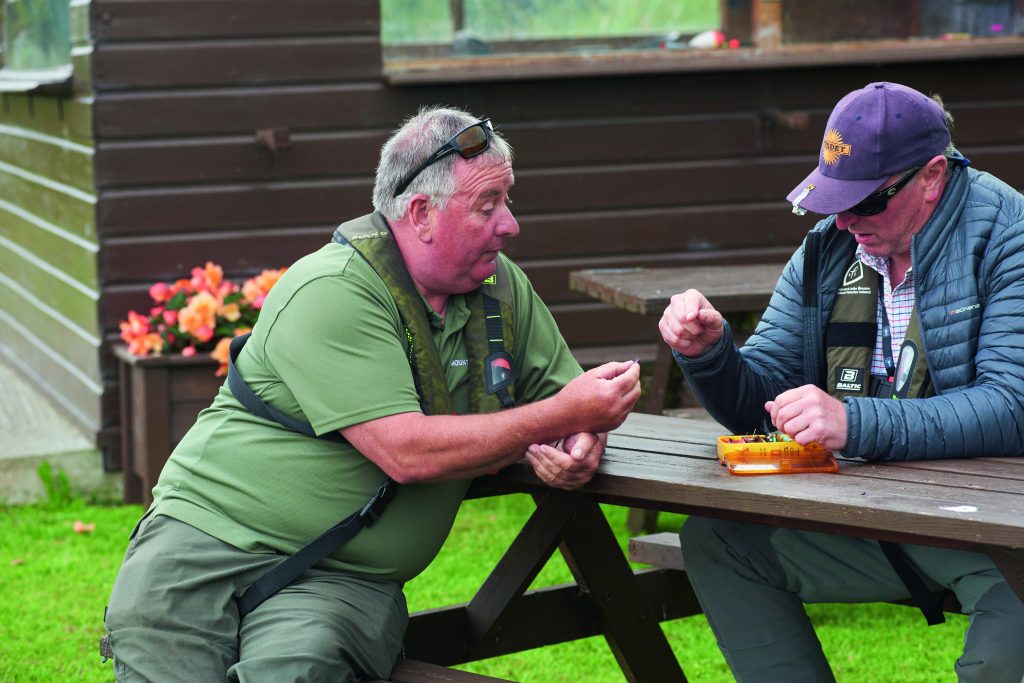
Having secured our Bangor Angling Club permits – which controls fishing and boat hire – the previous evening from fishery manager Seamus Henry at his West End Bar (while enjoying an excellent pint of the black stuff), we met our boatman for the day: Markus Müller, angling advisor to Inland Fisheries Ireland and a man who knows more about fishing on Carrowmore than most.
Originally from near Frankfurt in Germany, Markus moved to County Mayo 25 years ago. He and his partner, Christin Breuker, have fished Carrowmore ever since, and between them boast an impressive record of catches, with salmon up to 17lb and sea-trout to 4lb.
Fishing is fly-only from 1 April, and spring salmon – averaging around 7lb but regularly reaching double figures – are taken on traditional loch-style methods and wet-fly patterns, such as Green Peters, Dabblers and Bumbles. Being July, we were too late for the best of the salmon but ideally timed for the runs of sea-trout.
Tactics and flies for Carrowmore Lake
Carrowmore was less than an hour’s drive from our accommodation at the Mount Falcon Hotel, Ballina. After a slight technical hitch with the outboard’s fuel feed – quickly remedied by a trip into nearby Bangor Erris to pick up a replacement from Seamus – we were soon purring away from the boat dock across the gently rippled waters of this picturesque lake.
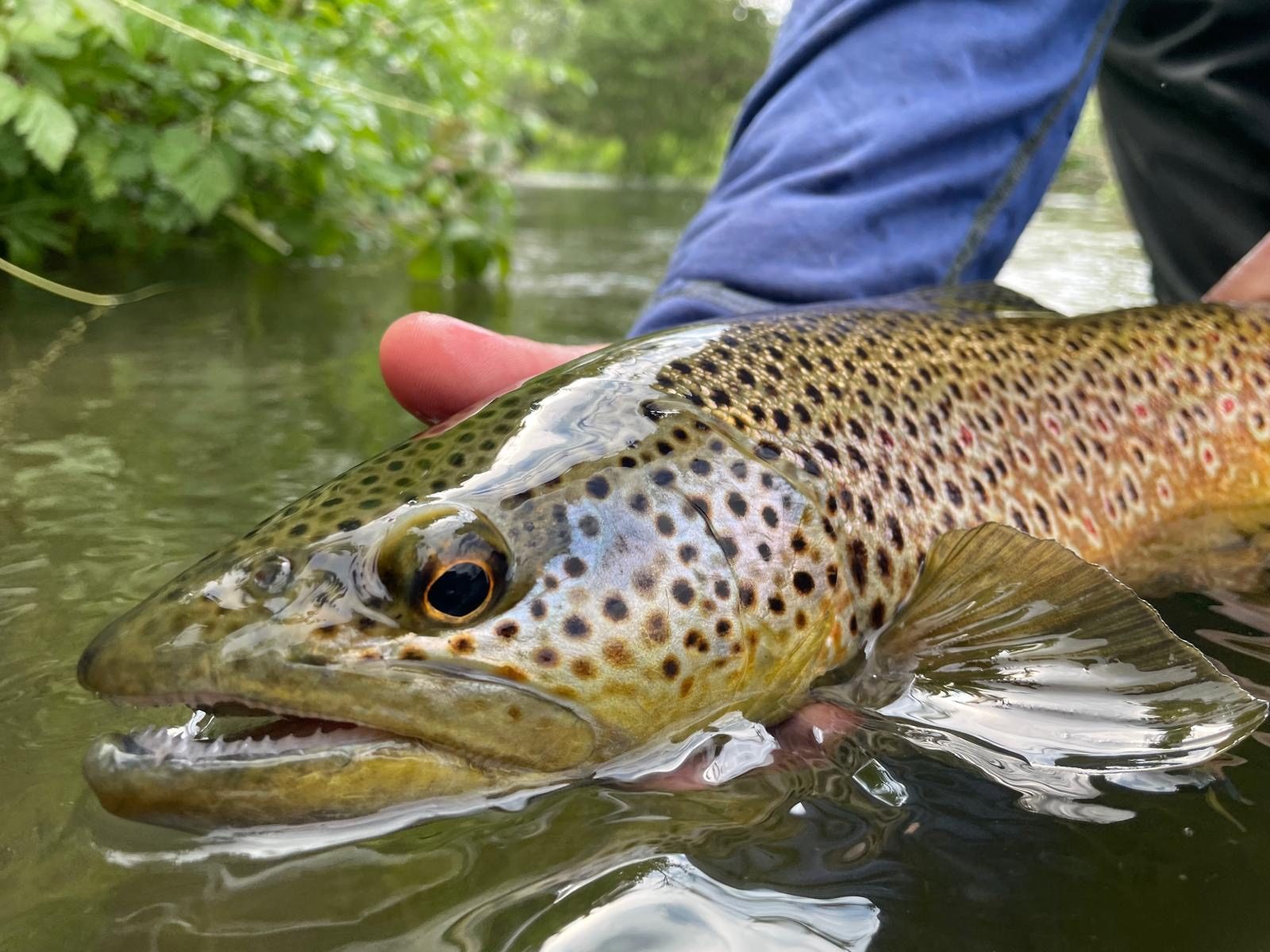
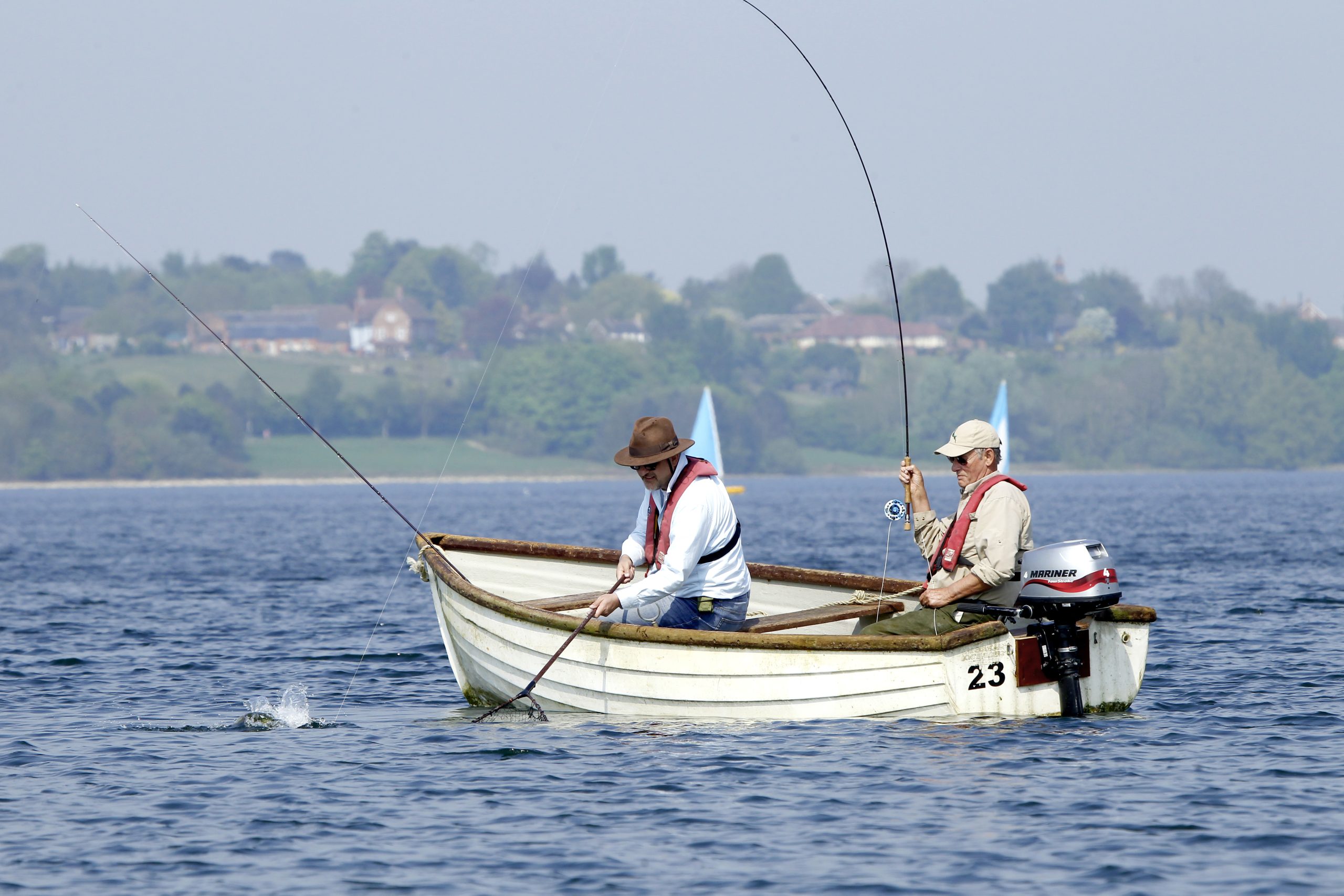
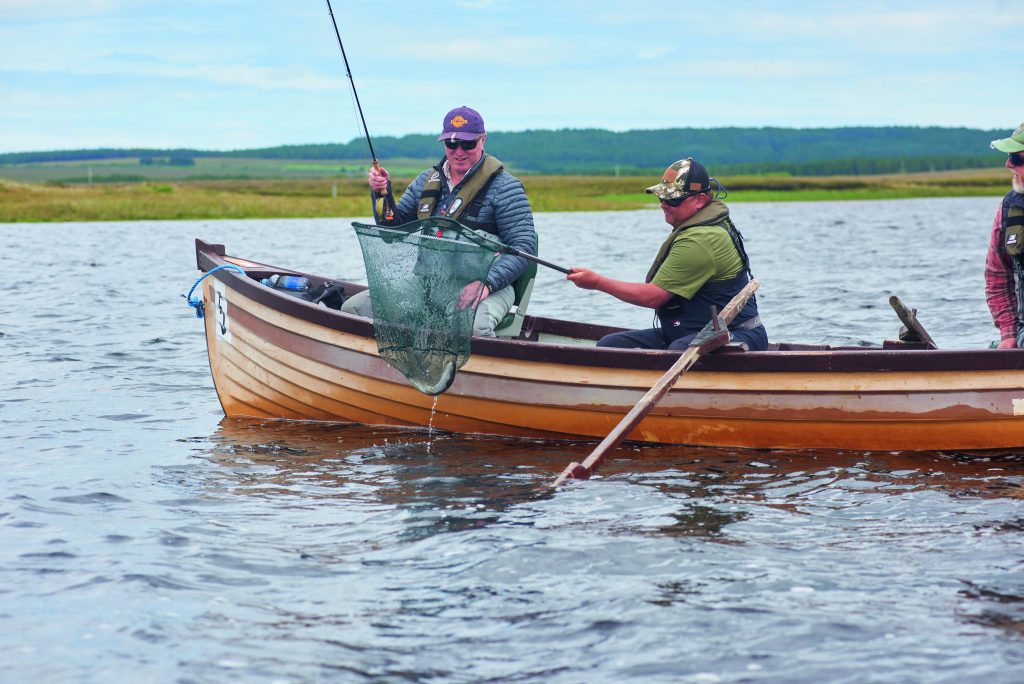
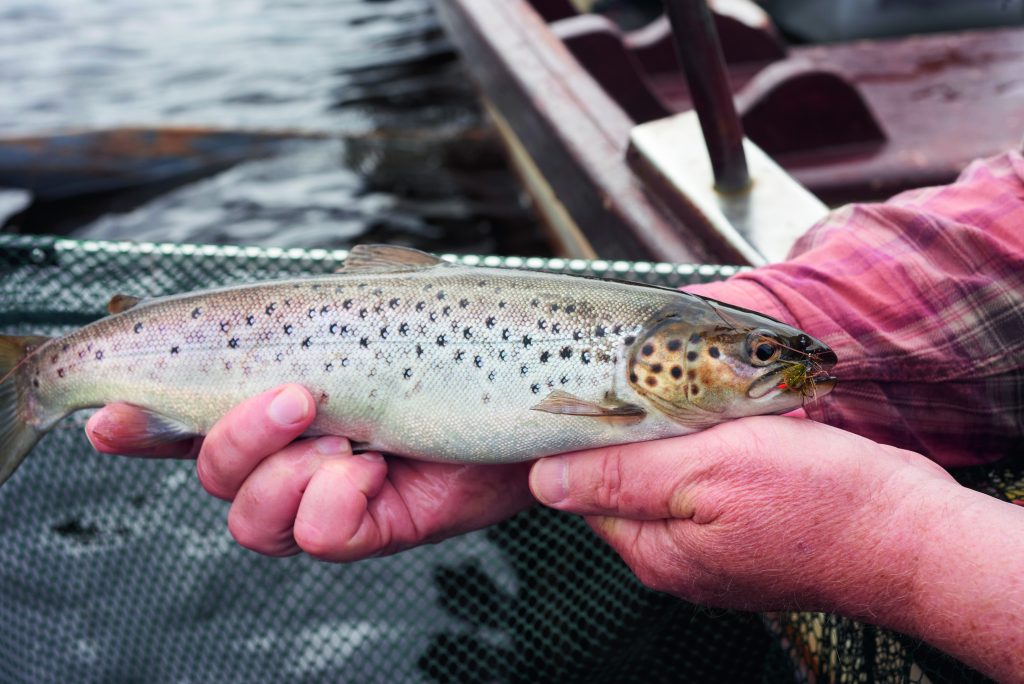
Following a couple of unproductive drifts over the open-water shallows near Bog Bay, Markus headed into the bay itself. The drifts here brought only splashy offers from small fingerling brownies, although they proved our bob flies were working. It wasn’t until we moved to Paradise Bay on the eastern shore that I finally tempted our first sea-trout, which snatched my red-tagged Green Peter Hopper as I dabbled it along the surface. At around a pound and as silvery as a full moon, it fought spiritedly on my 10ft seven-weight outfit, with plenty of athletic leaps to make my pulse race. A repeat drift towards the northern point produced another fish, only slightly smaller, which took Andrew’s size 12 Goat’s Toe point fly. We had evidently found a shoal in the entrance to the bay, and short drifts tight to the shore provided steady sport with both finnock and small brownies, including the odd better fish topping the pound mark. Most of these took either my Green Peter Hopper or Andrew’s Green Peter Muddler on the top droppers.
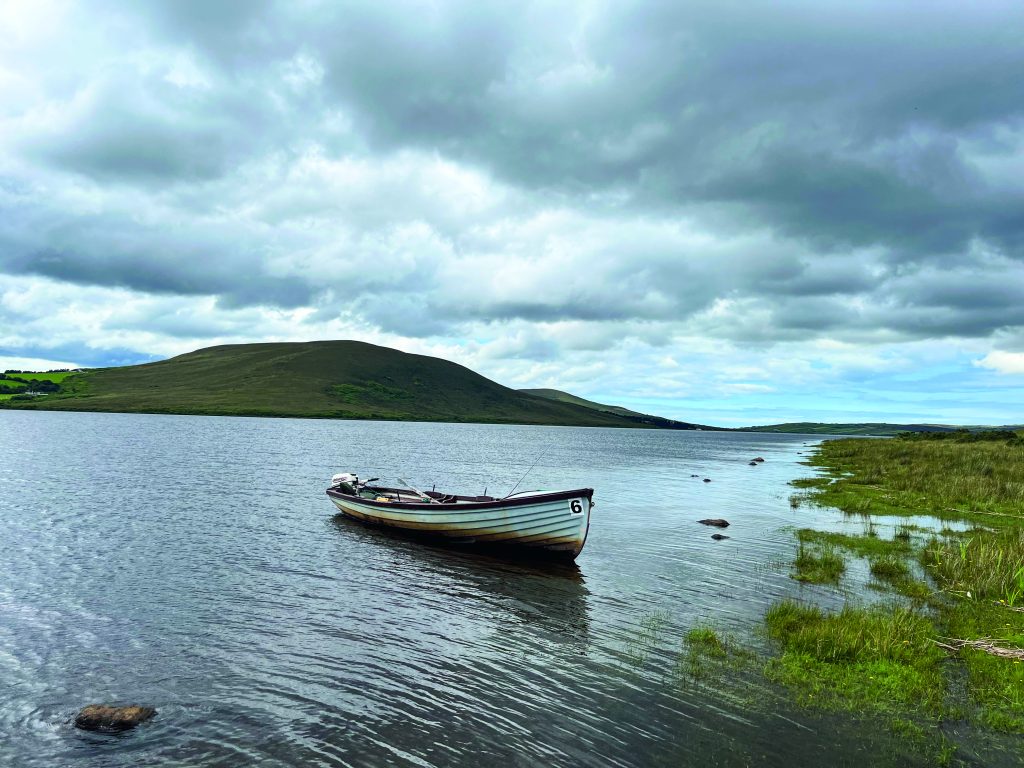
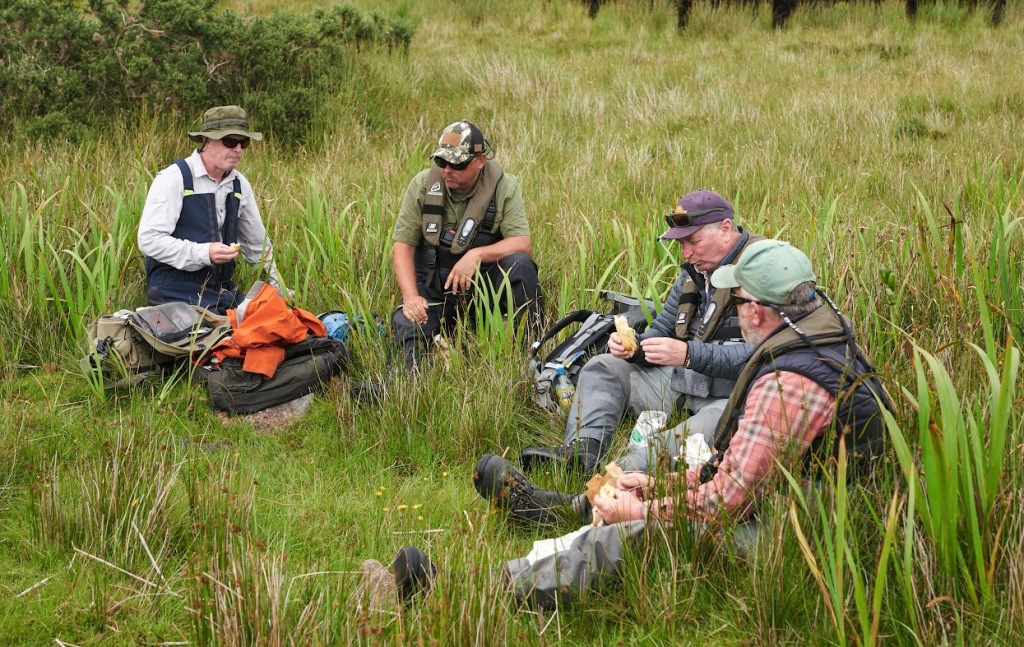
Tucking the boat into the lee of the point made the perfect spot to go ashore for lunch and enjoy our freshly made rolls, purchased that morning in Ballina. As we sat among the sedge, crocosmia and gorse covering the soft, peaty banks, we had a wonderful panoramic view across the lake to the Knocknascollop mountain on the western shore.
Carrowmore’s best spots for spring salmon
After lunch we resumed our search for larger sea-trout while Markus told us more about the spring salmon fishing.
He said, “Most of the salmon are caught on the north and east shores as they make their way from their entrance at the Munhin River, near the southern end, up the lake to run the Glencullin River, by far the most important of Carrowmore’s spawning headwaters. My favourite spots in spring would be Paradise Bay, Glencullin Mouth and the north shore.”
We returned to Paradise Bay, but unfortunately the morning breeze and cloud were fading, and in the shelter of the bay there was barely a breath of wind to push us along. This also meant nothing to deter the dreaded midges. After trying to ignore them and put on a brave face, I eventually had to resort to some rather lavish headgear – grabbing a Lifesystems pop-up hat and head net from my bag – to gain relief from the onslaught. Thankfully, once we reached the middle of the bay, the breeze picked up enough to deter them, and I could dispense with the beekeeper look.
We slowly worked our way across the lake, trying around the small islands of Gortmore and Attavally on the south shore, managing to add two more brace of finnock to our morning’s tally. However, the lack of wind and cloud was definitely affecting the fishing, preventing us from experiencing Carrowmore’s full potential. That said, we had seen enough to start busily planning our next visit – this time in spring – as we motored back to the slipway.
A place to remember
You instinctively know when a water has touched you, although it’s sometimes hard to explain exactly why. All I knew was that, despite the conditions, I longed to return and do it all again tomorrow. But we had other plans, and my return to Carrowmore’s shores would have to wait.
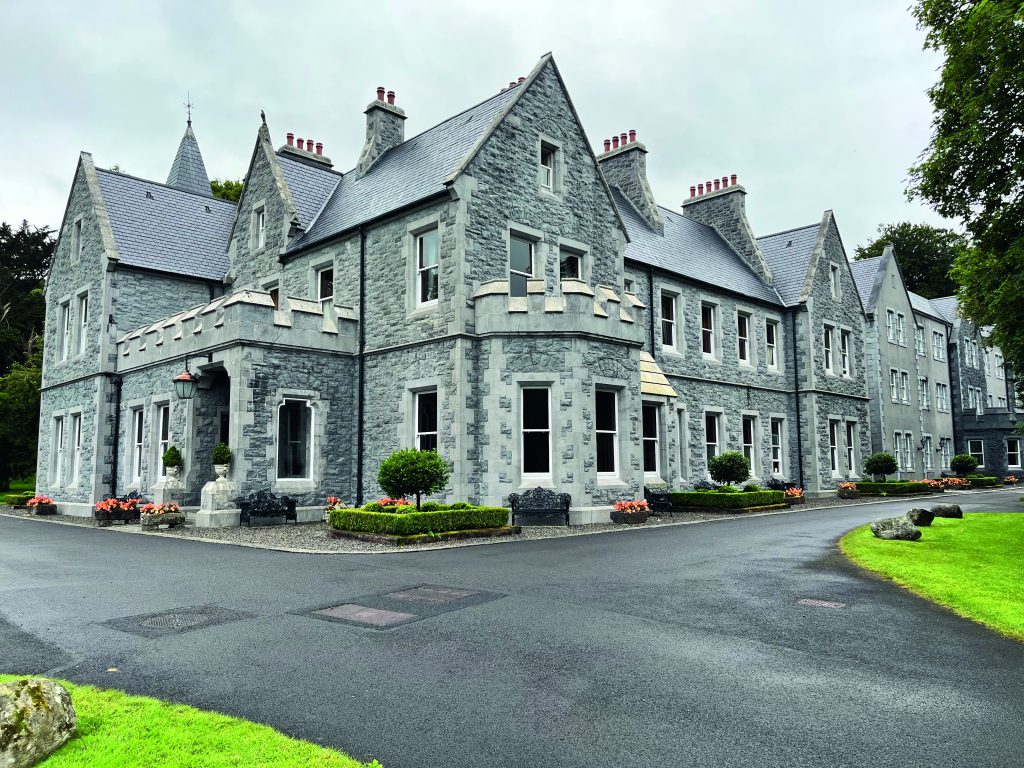
Staying at Mount Falcon Hotel
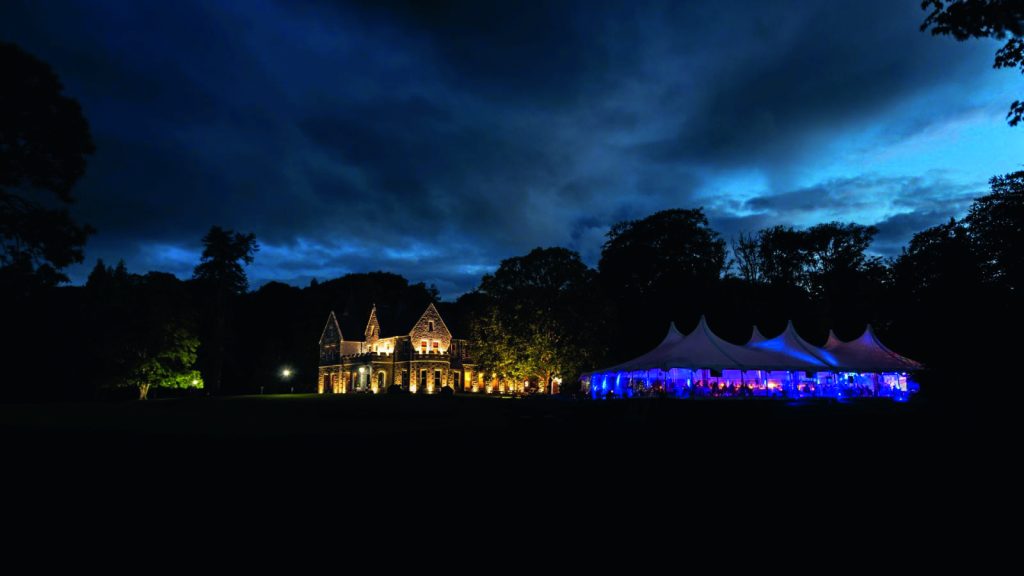
Back at Mount Falcon, it was a quick wash and brush-up, as we had been invited to one of the hotel’s popular summer al fresco evenings by owner Alan Maloney. Held every Saturday throughout the summer months in a beautiful marquee in the hotel’s old apple orchard, these evenings include a bar and dining experience with a menu by chef Tom Doyle. An outdoor seating area, with lighting and firepit, allowed us to enjoy a pre-dinner gin and tonic with views across the grounds, home to majestic trees.
Inside, there was excellent service from friendly staff and live music during the meal. Alan proved the perfect host and, as a keen fly-fisher himself, conversation inevitably turned to fishing.
His recommendation from the mouth-watering menu was the in-house dry-aged beef, personally selected by chef Tom. This proved spot on and was much needed after a full day on the water. With groups of family and friends enjoying the warm summer evening, there was a lively buzz throughout dinner, but it was after the meal that things really started to warm up, as some tables were cleared to reveal a dance floor and the music moved upbeat. The evening culminated in a spectacular table-top rendition of Gerry Rafferty’s Baker Street by the talented saxophonist and singer Lorraine McDonald.
Breakfast the next morning was a quiet affair, as we all felt the effects of burning the candle at both ends. But after an extra cup of coffee and a stroll around the hotel’s wooded grounds, I was ready to take on what would prove a challenging day.
Mount Falcon upper beat
We were fishing Mount Falcon’s own stretch of the River Moy – Ireland’s most prolific salmon river, with annual catches of 9,000 fish – so our hopes would usually be sky high. But the river had been closed due to high water temperatures and only re-opened after an overnight storm lifted water levels to bursting point two days earlier. With the river now dropping and clearing, the water temperature was below the 18-degree cut-off, but still far from ideal.
However, there were fish in the river, so we stood a chance. Setting off on the short two-minute drive down the hotel’s driveway, across the main road to Ballina and through the gateway to the beats opposite, we were met by fishery manager Michael Egan, who oversees rods on the hotel’s two miles of the lower river, reserved exclusively for its guests.
He explained: “The fishery is split into two beats, each covering one mile of double bank and accommodating three rods. The lower beat is mainly spinning and bait water, while the upper beat contains some excellent fly water.”
Fishing The Wall Pool
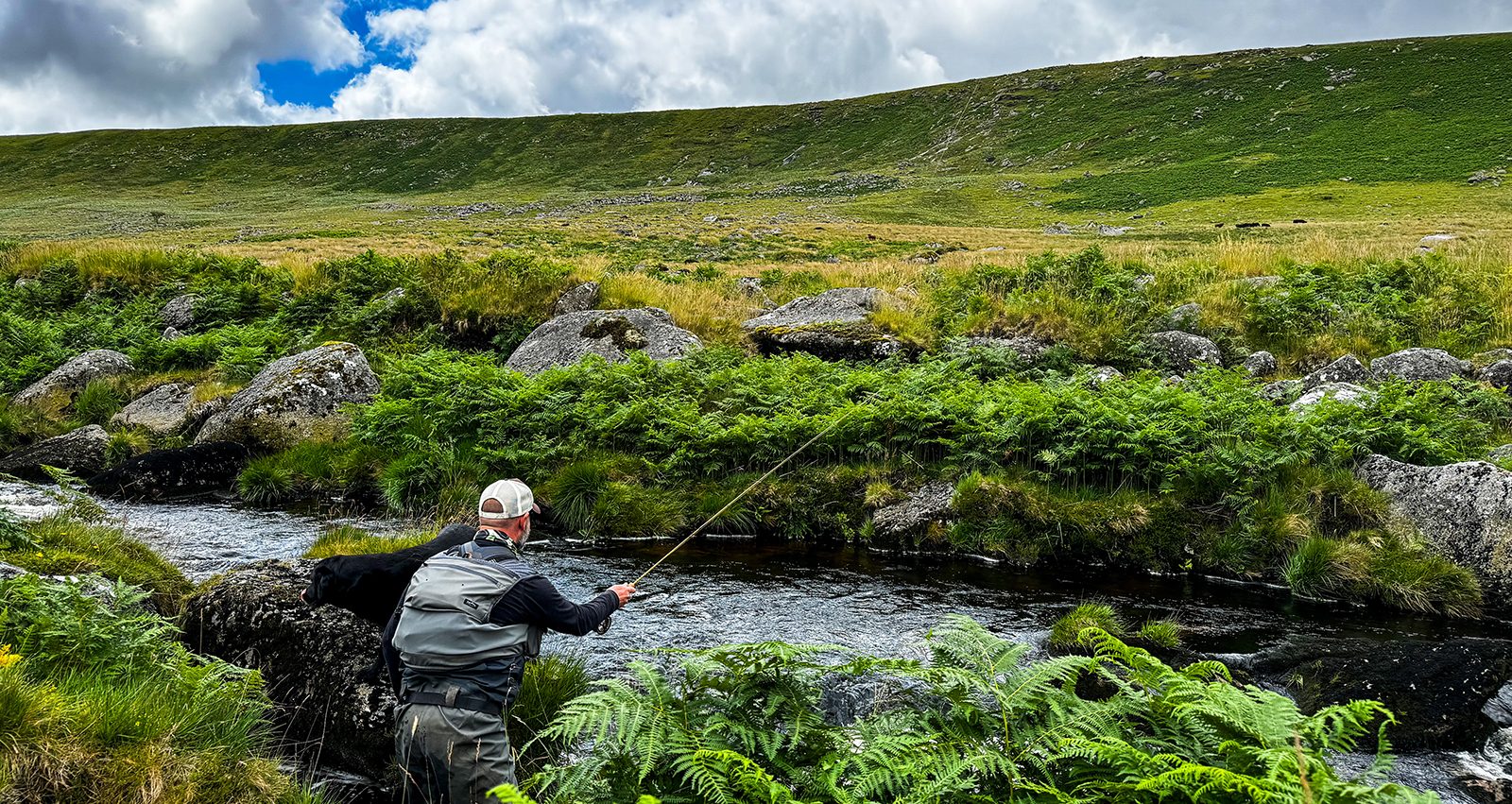
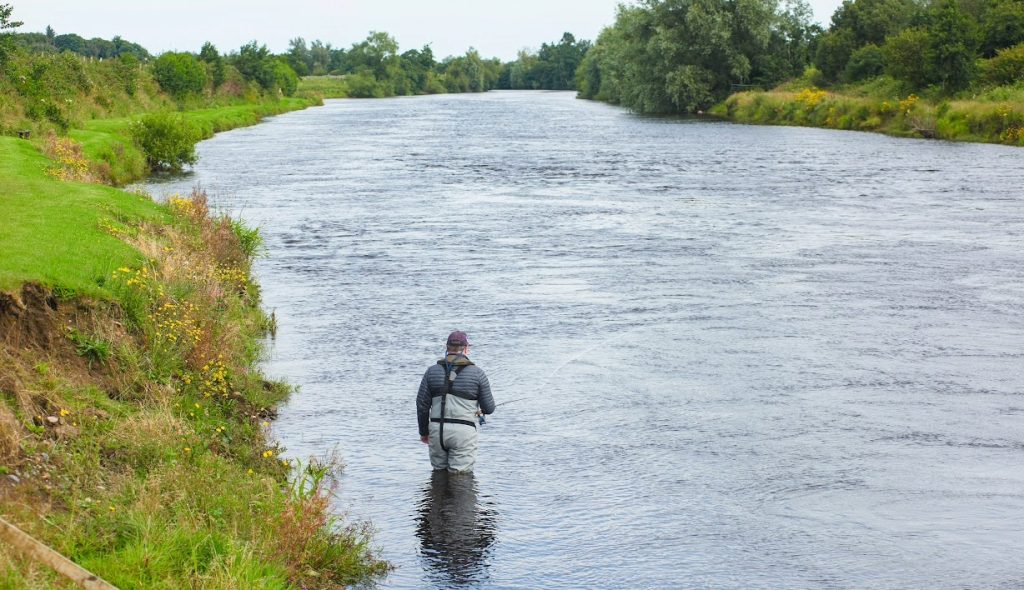
We loaded our rods into Michael’s boat and headed upstream to the fishing hut near the top of the upper beat. On the way, Michael pointed out the productive Wall Pool, the long run just below the hut. Despite being a fairly straight stretch of river, it holds a surprising number of features, all of which Michael showed us before he and Andrew climbed back into the boat and motored upstream. I, meanwhile, walked downstream to start at the head of the Wall Pool.
Unlike the previous day, the wind had swung and strengthened overnight. Where we had faced light southerlies on Carrowmore, we now had a howling northerly blowing straight upstream. I fished for around 15 minutes with my 13½ft double-hander and nine-weight Scandi line, and although I was casting a decent line in the conditions, I wasn’t confident that I was covering all the available features – many of which were rocks and ledges past midstream. So it was back to the hut for a change of line. Removing the Scandi head, I replaced it with a 600-grain Rio Max Launch Skagit, which gave me the extra distance to swing my Willie Gunn Snaelda more effectively.
We fished hard all morning, encouraged by fresh fish showing throughout the beat, but by lunchtime we still had nothing to show for it.
Fishing The Wall Pool Straight
After a quick break, we swapped positions, with Andrew on the bank and me in the boat with Michael. Again, he headed upstream to the head of the Wall Pool Straight, where fish had been showing regularly all morning. He explained that he would normally drop anchor and rope us down the pool in sections, but in such a strong wind this was impossible. Instead, he drove the bow of the boat into the bank and held us there on the motor while I cast.
“Ready for the bump – here it comes!” he repeated throughout the afternoon, each time wedging us against the bank, either while moving down the pool or after we’d been blown out of position. An accomplished competition speycaster, he also offered some tips for beating the wind, and it was clear he was doing everything possible to get us a fish. This in turn made me try harder – possibly too hard – as midway through the afternoon there was a sickening crack during a cast, resulting in a break just above the second ferrule of my rod. Luckily, Michael had a spare already set up in the boat, so no fishing time was lost.
Exploring more of Ireland’s north-west
The odd fish continued to show through the afternoon, although not in the same numbers as in the morning. Hearts stopped as both Andrew and I had slow, tentative pulls, but they came to nothing.
“The fish are there,” said Michael, “but with this water temperature they’re just not interested in taking the fly. The odd one will have a little pluck at it, but they’re not really having it.”
His point was perfectly proved in the following days, as dropping water levels and temperatures brought fish on to the take, and the beat produced fresh grilse for the incoming rods. For us, however, it was time to return to the hotel, pack our bags and head further west.
Mount Falcon is the perfect base for fishing Ireland’s north-west. As well as its own stretch of the Moy on the doorstep, the famous Ridge Pool and Cathedral Beat in Ballina town are only minutes down the road. Numerous fisheries lie within an hour’s drive, including the Owenmore and Eriff rivers and loughs Beltra, Mask, Conn and Carra – not to mention Carrowmore Lake itself. Indeed, the whole of Ireland’s north-west is a sheer paradise for the visiting angler, as well as one of its most scenic regions, with miles of stunning coastline waiting to be explored.
Factfile
Carrowmore Lake
Season: 1 February-30 September.
Permits available from: Bangor Erris Angling Club, The West End Bar, Bangor Erris, Co. Mayo.
Tel: 00353 97 83487.
Email: info@bangorerrisangling.com
Mount Falcon Hotel
Foxford Road, Ballina, Co Mayo F26 H744.
Tel: 00353 96 74472.
Email info@mountfalcon.com
Web: mountfalcon.com
Check the website for information on fishing beats on the River Moy and packages covering other rivers and lakes around the north-west area.
Related Articles
News
Where to fish
22 Great trout fisheries to try this year
ADVERTISEMENT FEATURE: No matter where you live, there is a fishery to suit your needs
By Trout & Salmon
Overseas
Where to fish
Chasing the Atlantic Giants: The Canarian Fishing Event 2026 in Puerto de Mogán
Beyond the strike: discover a world-class fusion of elite sport fishing, nautical lifestyle, and the unique charm of Gran Canaria’s “Little Venice”.