★ Click here to enter the Trout and Salmon crossword for the chance to win a Loop Z1 double-handed rod★

Dalmatian pelican reintroduction splits opinion
Proposals to reintroduce Britain's largest-ever bird have sparked warnings that anglers could be locked out of prime fishing waters.
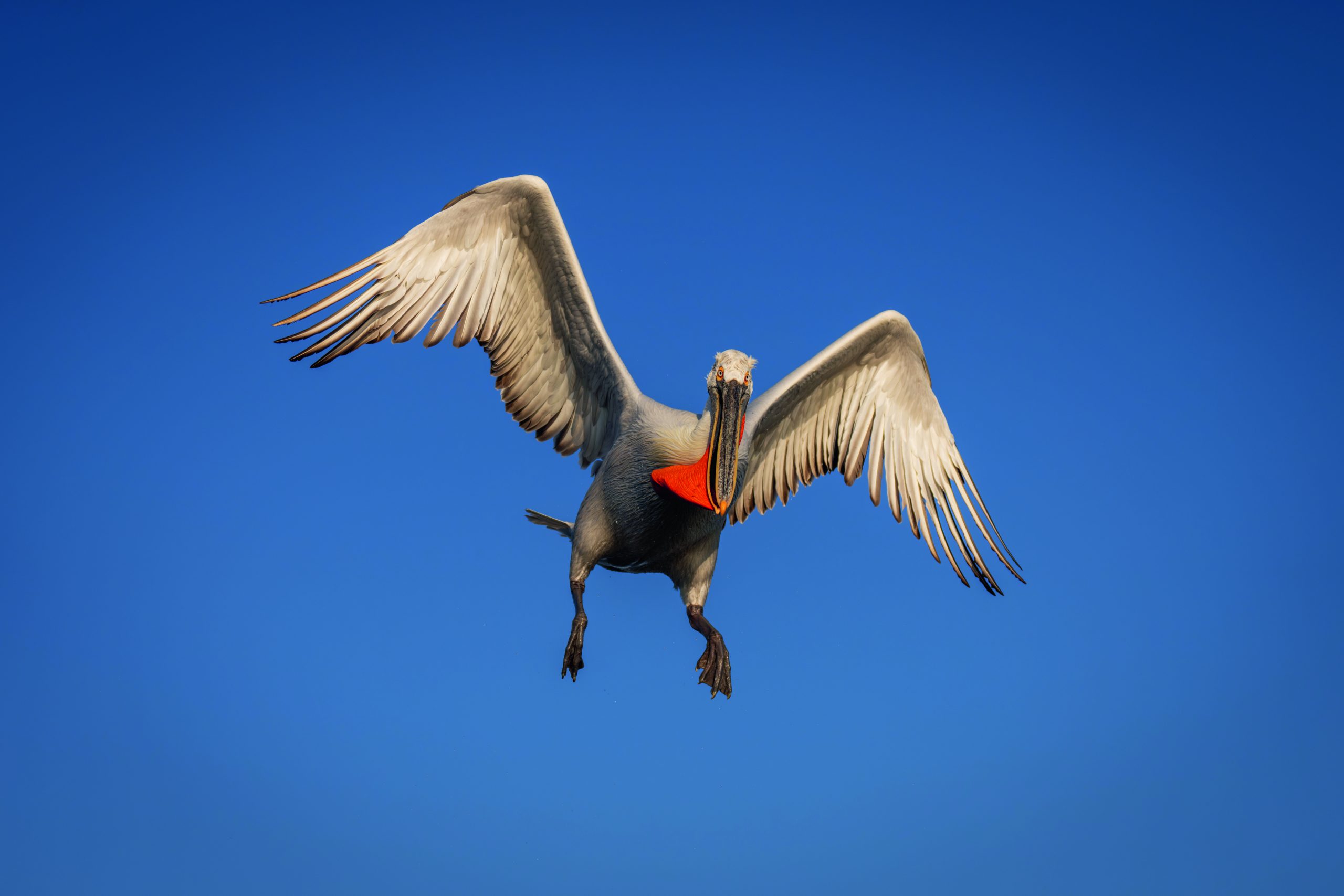 Credit: Nick Dale via Getty Images

Reintroduction plans under review
Proposals to reintroduce Britain’s largest-ever bird have sparked warnings that anglers could be locked out of prime fishing waters.
Dalmatian pelicans, extinct in Britain since the Middle Ages, consumes more than a kilogram of fish daily and has a three-metre wingspan. Conservation company Restore is now assessing whether to return the species to wetlands including the Norfolk and Suffolk Broads, Essex marshes and Somerset Levels.
.
Fishing sector raises concerns
Mike Cohen, chief executive of the National Federation of Fishermen’s Organisations, described the plan as “unrealistic – even hubristic”, warning it could trigger habitat closures to protect nesting sites and feeding grounds.
“It is not hard to imagine that any release of these birds will be followed by demands for land to be closed off to protect their nesting sites and fisheries to be closed to ensure that they can feed,” he said.
Restore insists the birds primarily target coarse fish of little interest to anglers. A spokesman said there was “no strong evidence from Europe that [Dalmatian pelicans] systematically target prized angling species, nor that they pose a material threat to managed fish farms”.
.
Global population
The global population of Dalmatian pelicans is estimated at between 10,000 and 20,000 birds, with concentrations in Greece, central Asia and China’s eastern coast.
Do you have a news story to share?
Contact our group news editor Hollis Butler at hollis.butler@twsgroup.com. We aim to respond to all genuine news tips and respect source confidentiality.
Stay in the loop
Don’t miss a story – get angling news straight to your inbox. Subscribe to our newsletter.
Related Articles
News
Scottish wild salmon and sea trout catches hit 73-year low
Official statistics released by the Scottish Government reveal that rod catches for both wild Atlantic salmon and sea-trout in 2025 have plummeted to their lowest recorded levels in 73 years
By Hollis Butler
News
TwinPeakes fly-fishing instructors celebrate world title and new qualifications
Two young instructors at the Royal Deeside fly-fishing school, TwinPeakes, are celebrating major milestones after claiming a world casting title and becoming the youngest qualified instructor in the U...