★ Win a VALLON prize bundle worth almost £500! Enter here ★


Fly tying

The X-factor
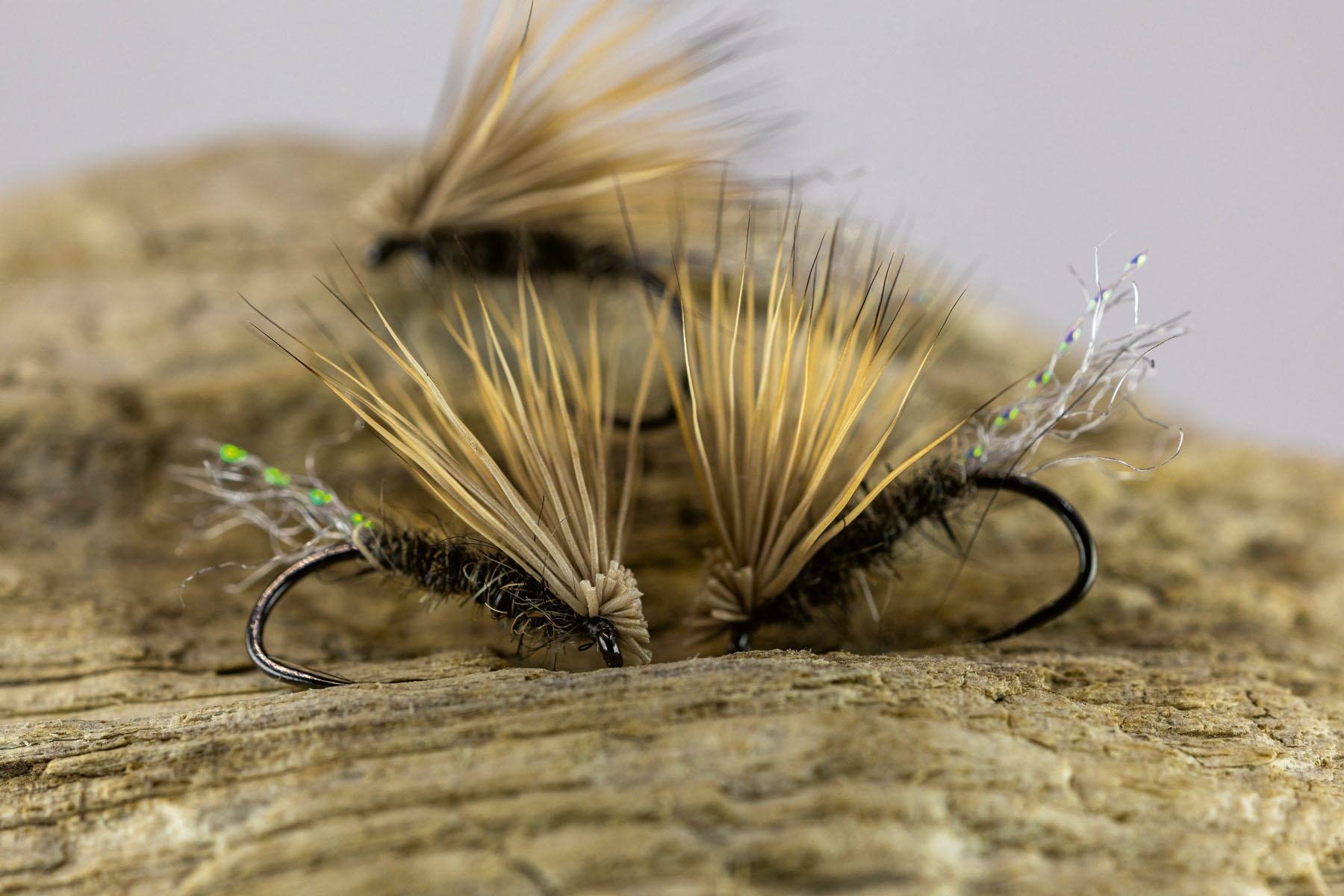
The X Caddis was created to mimic a struggling, emerging caddisfly

Words and photography: Gareth Lewis
Trout are undoubtedly among nature’s most adaptable and opportunistic predators, yet they have also evolved into wary and elusive hunters of upwings and aquatic invertebrates.
Similar to someone who’s pulled up to a McDonald’s drive-through, anticipating their meal to be swiftly prepared, packaged and delivered with a smile, a trout will often select its spot in the river based, albeit slightly differently, on how safe it feels and, similarly to our Big Mac ordering chum, where it expects food to appear. More importantly, and more to my point, both scenarios’ participants don’t expect their food to be anything but… food. As such, simple, all-and-nothing patterns often out-fish more detailed patterns as long as, critically, the fish aren’t spooked in the first place.
If you’ve met me at a fly-dressing demonstration or shared time with me on the riverbank, you’ve probably noticed my preference for simplicity – in angling and in life. This philosophy is reflected in my approach to fly selection: I carry just a single, six-compartment fly-box, stocked with all-and-nothing patterns that broadly suggest a variety of aquatic invertebrates without closely imitating any particular species.
Like most of us, I rotate through a handful of favourite patterns every few seasons, always looking for straightforward patterns which offer that X-factor, but there are a few that earn a perpetual place in my fly-box. Devised in the 1980s by Jackie Mathews, wife of legendary US angler Craig Mathews, the X Caddis was created to mimic a struggling, emerging caddisfly. It has earned a permanent place in my box thanks to its versatility. Although it visually suggests a caddis, its inherent floatability makes it well-suited to faster runs and riffles, to which I often gravitate. It also performs brilliantly when upwings are emerging.
Trout, ever models of brutal efficiency, frequently feed on injured or dead invertebrates that are stillborn or trapped in the meniscus. The X Caddis, with its trailing shuck, convincingly mimics these struggling prey items too. This is a key factor behind the X Caddis’s consistent success.
Elegantly straightforward, the pattern has a buoyant deer-hair wing, a neatly dubbed body (pick out a few guard hairs for added bugginess), and a synthetic trailing shuck (originally crafted from Z-Lon) designed to sit enticingly in the surface film. This combination ensures superb floatation in fast water and offers a convincing silhouette of a struggling or emerging insect.
As an optional extra and depending on how long I want to spend at my tying desk, I sometimes add a single strand of Krystal Flash for added bling, but in the vein of keeping things simple, I would argue even this is unnecessary. Oh, and prior to fishing, I’ll give the wing and shuck a light greasing.
I’ve spoken about the X Caddis at numerous fly-dressing demos, sharing its virtues and memorable moments on the water. One occasion stands out on the River Usk in South Wales. It was early in the season, and the river was alive with large brook duns. Contrary to several articles I’ve read suggesting trout ignore LBDs, these fish were feasting on both the emerging nymphs and the dun stages of this large Ephemeroptera.
Unfortunately, I’d failed to prepare any specific LBD imitations – a lapse that irked me at the time as it was before I’d embraced my generalist approach. Rummaging through fly-boxes (I carried several then) for something that might pass, I settled on the X Caddis. Its size, shape and silhouette were comfortingly close to the naturals, and that trailing shuck…oh, that trailing shuck.
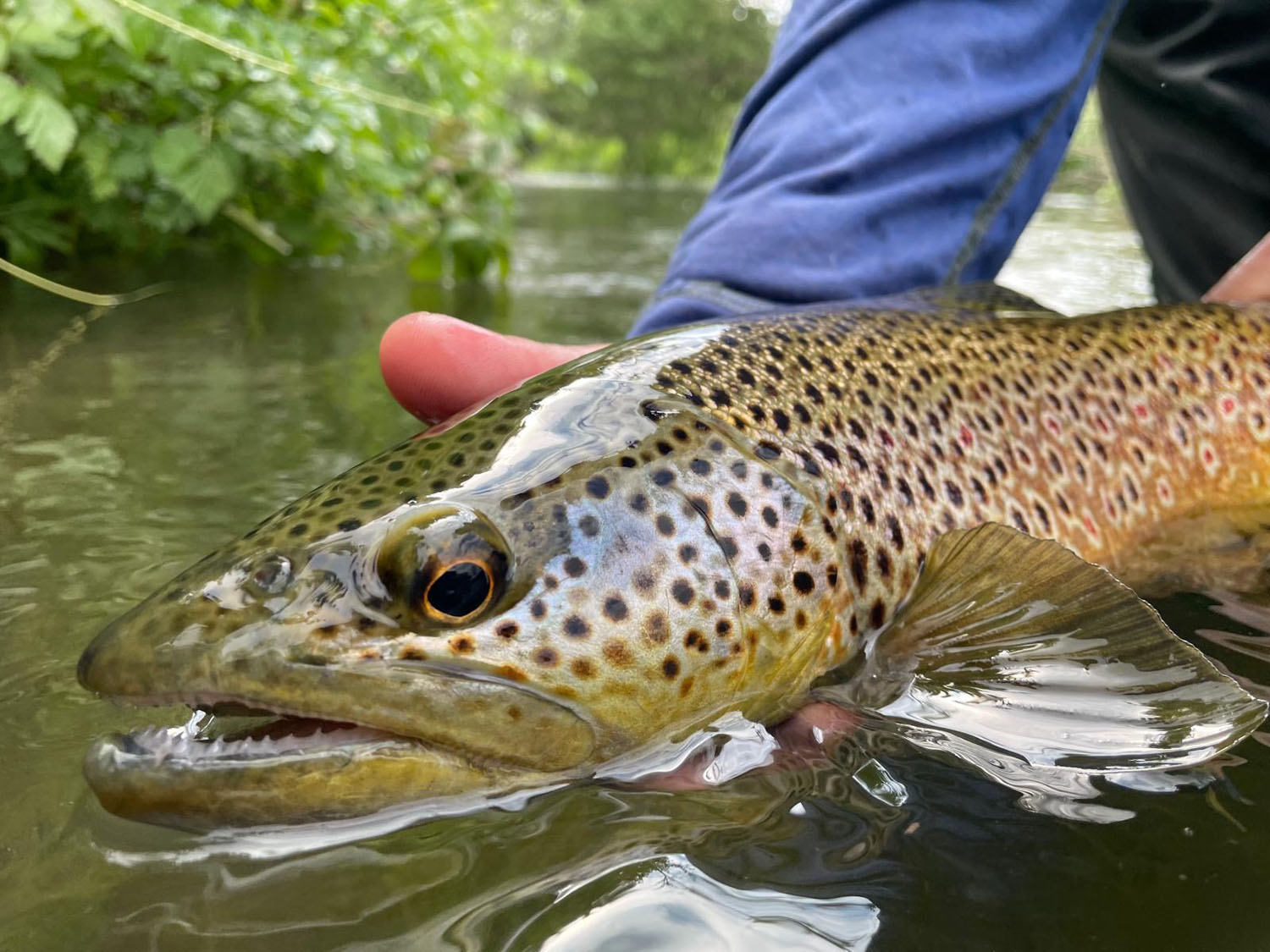
I watched several trout rising in a promising glide below where several lively, oxygenated riffles merged – a classic haunt for nymphs and a likely spot for hungry fish, who opt to lie in the slacker waters picking off emerging invertebrates. Casting upstream and across, and employing a reach cast for a more natural drift, I presented the X Caddis into the feeding lane. It didn’t take long: the fly was confidently taken, and soon after I had a rather annoyed trout cradled in the net, likely rethinking her life decisions. This experience only cemented my faith in the X Caddis as an adaptable pattern – not just when the unexpected arises, but as a confident first-choice fly.
Takes are frequently a blend of assured, confident grabs and more subtle, gentle sips, demonstrating that not every caddis imitation provokes exuberant, splashy rises. In my view, the trailing shuck imparts a crucial ‘struggling emerger’ or ‘prey’ quality, encouraging fish to approach with calm deliberation. These understated rises suggest the trout sense no urgency, perceiving the fly as a vulnerable insect rather than one that might escape at any moment.
Although the selection within my six-compartment fly-box shifts subtly from season to season as I experiment with new generalist patterns, and regardless of which aquatic invertebrates happen to be hatching, the versatile X Caddis has become a constant companion.
Fly of the month
Hook: Size 16 Fulling Mill Ultimate Dry (FM50 50)
Thread: Light brown Fulling Mill Pro Thread Twisted 70D
Shuck: Grey Fulling Mill Ultra Dry Yarn (a single strand of Krystal Flash is optional)
Body: Pepperbox Fulling Mill Eco Warrior Dub
Wing: Fine natural deer hair