Trout & Salmon's editor looks back at the evolution of ultralight fly fishing and explains why modern 2wt and 3wt setups are no longer just a novelty, but a tool for ultimate delicacy
Pete Tyjas19 May 2026
It was several years ago now that I bought my first light-line rod.
At the time, I wasn’t sure how practical it would be or how often I’d actually use it.
The rod came with a line that did the job, although it’s probably fair to describe it as more of a dry-fly-only setup.
I fished it for many years on the smaller streams here in Devon, and over time I really grew to appreciate what these lighter rods could do.
The evolution of light-line fly fishing
Since the rise of euro/tight-line fishing, the number of longer light-line rods on the market has increased dramatically.
Many of them aren’t what I’d call true crossover rods that can perform in both nymphing and dry fly fishing, but I’ve found a few gems along the way, and I now own 9½ft rods in 2wt, 3wt and 4wt.
For the bulk of the fishing I do, this length suits me perfectly. I can mend line easily, the rod feels light in the hand, and it remains effortless to cast throughout the day. For some reason I simply prefer 9½ft rods to 10ft models, although that’s purely personal preference.
Another advantage today is the range of fly lines now available in lighter weights. When I bought my first 1wt, there were barely any suitable lines on the market. Now there are plenty of excellent options in the 1–3wt range.
Are ultralight fly rods actually practical?
The burning question, though, is whether these rods are actually usable.
My answer is absolutely yes.
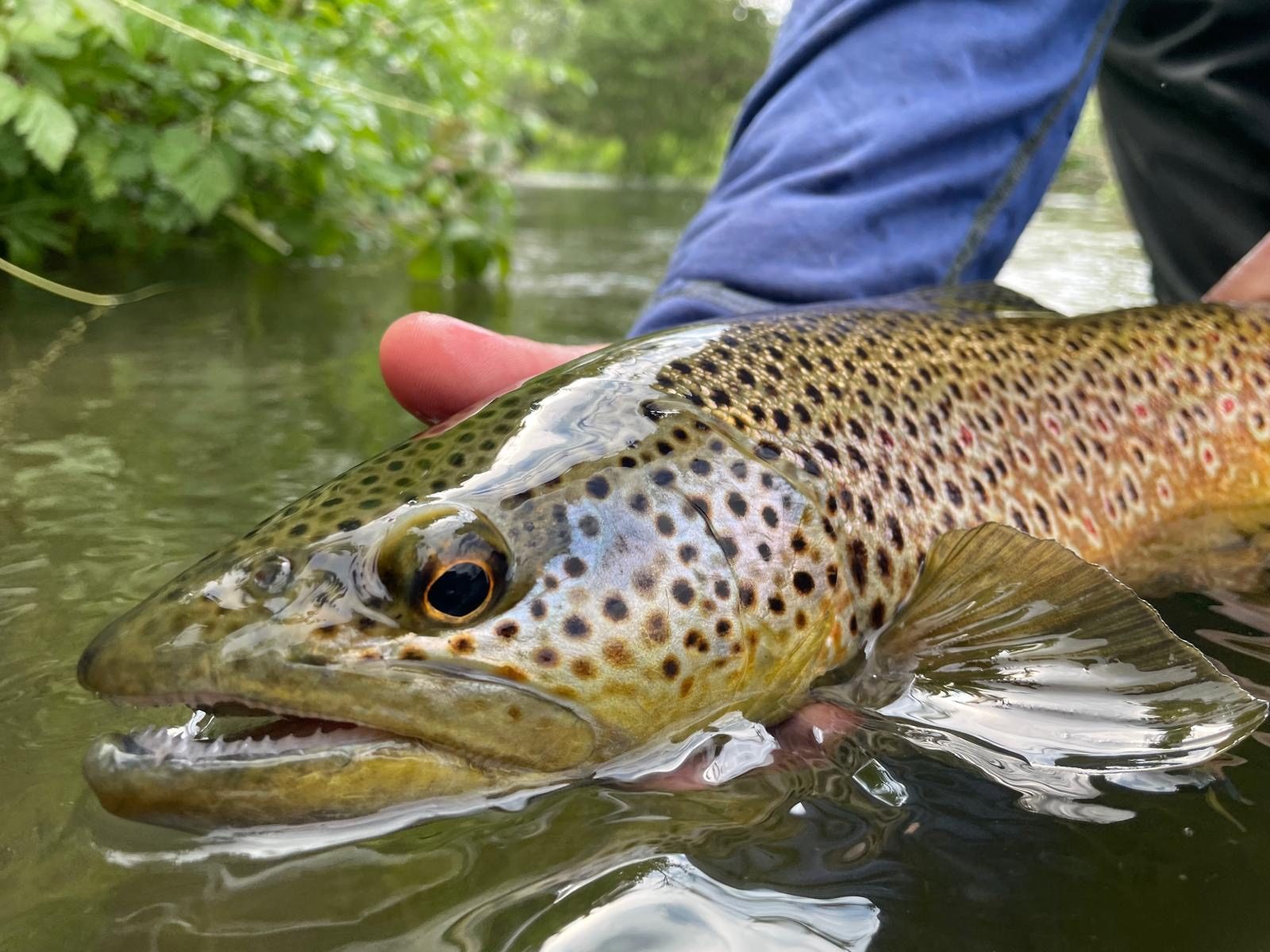
As I write this, I’ve spent almost the entire season fishing with my 9½ft 2wt. Although I primarily fish dry flies, it has handled small nymphs perfectly well and, if needed, could comfortably cover full euro-nymphing duties too.
These rods were once viewed as more of a novelty or even a toy, but when I’m stalking a big rising trout and want everything to land as delicately as possible, a 2wt definitely gives me an advantage.
This article contains affiliate links. If you click on one of these links and make a purchase, we may earn a small commission at no additional cost to you. Affiliate income helps us maintain the quality of our content and keep it freely accessible.
All recommendations are based on our honest opinions and thorough research.Would you like to appear on our site? We offer sponsored articles and advertising to put you in front of our readers.
Find out more.
Visually sophisticated and offering high-performance braking and line management, this premium-priced fly reel is impossible to ignore
By Pete Tyjas
Manage Consent
To provide the best experiences, we use technologies like cookies to store and/or access device information. Consenting to these technologies will allow us to process data such as browsing behavior or unique IDs on this site. Not consenting or withdrawing consent, may adversely affect certain features and functions.
Functional
Always active
The technical storage or access is strictly necessary for the legitimate purpose of enabling the use of a specific service explicitly requested by the subscriber or user, or for the sole purpose of carrying out the transmission of a communication over an electronic communications network.
Preferences
The technical storage or access is necessary for the legitimate purpose of storing preferences that are not requested by the subscriber or user.
Statistics
The technical storage or access that is used exclusively for statistical purposes.The technical storage or access that is used exclusively for anonymous statistical purposes. Without a subpoena, voluntary compliance on the part of your Internet Service Provider, or additional records from a third party, information stored or retrieved for this purpose alone cannot usually be used to identify you.
Marketing
The technical storage or access is required to create user profiles to send advertising, or to track the user on a website or across several websites for similar marketing purposes.