★ Click here to enter the Trout and Salmon crossword for the chance to win a Loop Z1 double-handed rod★

How to tie a Sedgehog fly — step-by-step tying guide
The Sedgehog is one of those flies that earns its place in the box through sheer versatility — fish it static on the surface as a dry, or pull it just beneath the film on a slow-sinking line and it comes to life. Originally conceived as a sedge imitation, the layered deer-hair wing and dubbed seal's fur body create a profile that trout take for a wide range of prey, making it worth learning for any stillwater or river angler.


This step-by-step guide covers everything you need to tie the Sedgehog from scratch: the full materials list, hook sizing, body colour options and a ten-step tying sequence with clear instructions at each stage.
The Sedgehog is a wet-dry trout pattern that sits in the film or just below it, creating a dense, buoyant profile suggestive of sedge flies and many other prey items found in and around the surface. Fish it static as a dry fly or retrieve it very slowly on a slow-sinking line, where the deer-hair wing and dubbed body create enough disturbance to draw attention from a long way off.
A size 12 hook is the recommended starting point — the proportions suit the fly well and it is a practical size to handle at the vice.
What materials do you need to tie a Sedgehog?
The Sedgehog uses a short, straightforward list of materials, all readily available from UK fly-tying suppliers:
- Hook: Size 12 wet-fly
- Thread: Match to your chosen colour theme
- Wing: Roe deer hair, in sparse bunches
- Body: Seal’s fur — try claret, olive, hare’s ear, fiery brown, Green Peter, amber, orange, brown, or a blend
- Hackle: Light furnace hen
Seal’s fur is the body material that defines the pattern. Its coarse, translucent fibres catch light well and hold air bubbles in the surface film. Blending two or three colours together in the palm before dubbing gives subtler, more naturalistic results than using a single shade straight from the bag.
How to tie a Sedgehog — step by step
Work through the sequence below from tail to head, building the wing in stages. Take your time over the pinch-and-loop technique at the start — it takes a little practice to get the hair sitting right, but it is worth mastering before you move on.
 Step 1. Apply thread in front of where the first bunch of hair will sit. Use a pinch-and-loop to locate the first sparse bunch of roe deer hair, then secure it with tight thread turns.
- Step 2. Add a few thread turns directly on to the hook shank, then trim off the waste hair ends. With the thread positioned in front of the hair roots, apply a small pinch of seal’s fur in your chosen colour.
- Step 3. Dub the fur on to the thread and wind it over the hair roots. Stroke each turn back over the roots before adding the next, to keep the hair pointing in the right direction.
- Step 4. Position the next bunch of deer hair immediately in front of the dubbing using a pinch-and-loop, and fix it securely with tight thread turns.
- Step 5. Add thread turns directly on to the shank, trim the waste hair, and cover the roots with a small pinch of seal’s fur in your second colour — Green Peter works well here.
- Step 6. Prepare and catch in a third slim bunch of deer hair, with the tips sitting almost level with those of the previous bunch.
- Step 7. Fix the third bunch in place with tight thread turns over the roots, then add a few turns directly on to the shank.
- Step 8. Repeat this process until three to five hair bunches have been added, building a full, layered wing. Keep each bunch sparse — thick clumps reduce movement and buoyancy.
- Step 9. Select a light furnace hen hackle and strip the soft fibres from its base. Catch it in, then wind on two turns at the base of the wing.
- Step 10. Secure the hackle tip with the tying thread and trim off the excess. Add a few more thread turns to seat the hackle correctly, then finish with a whip finish.
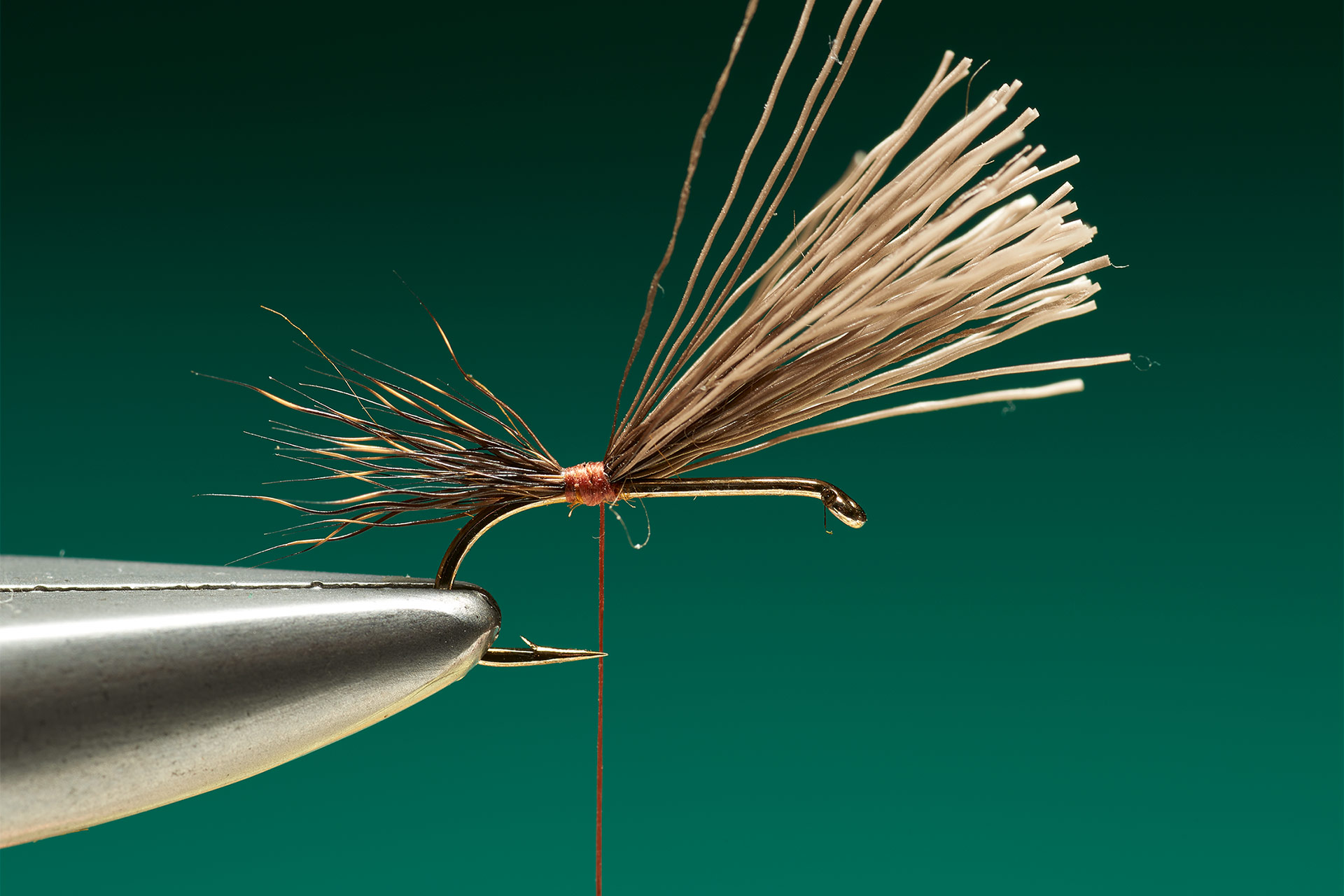 Step 1. Apply thread in front of where the first bunch of hair will sit. Use a pinch-and-loop to locate the first sparse bunch of roe deer hair, then secure it with tight thread turns.
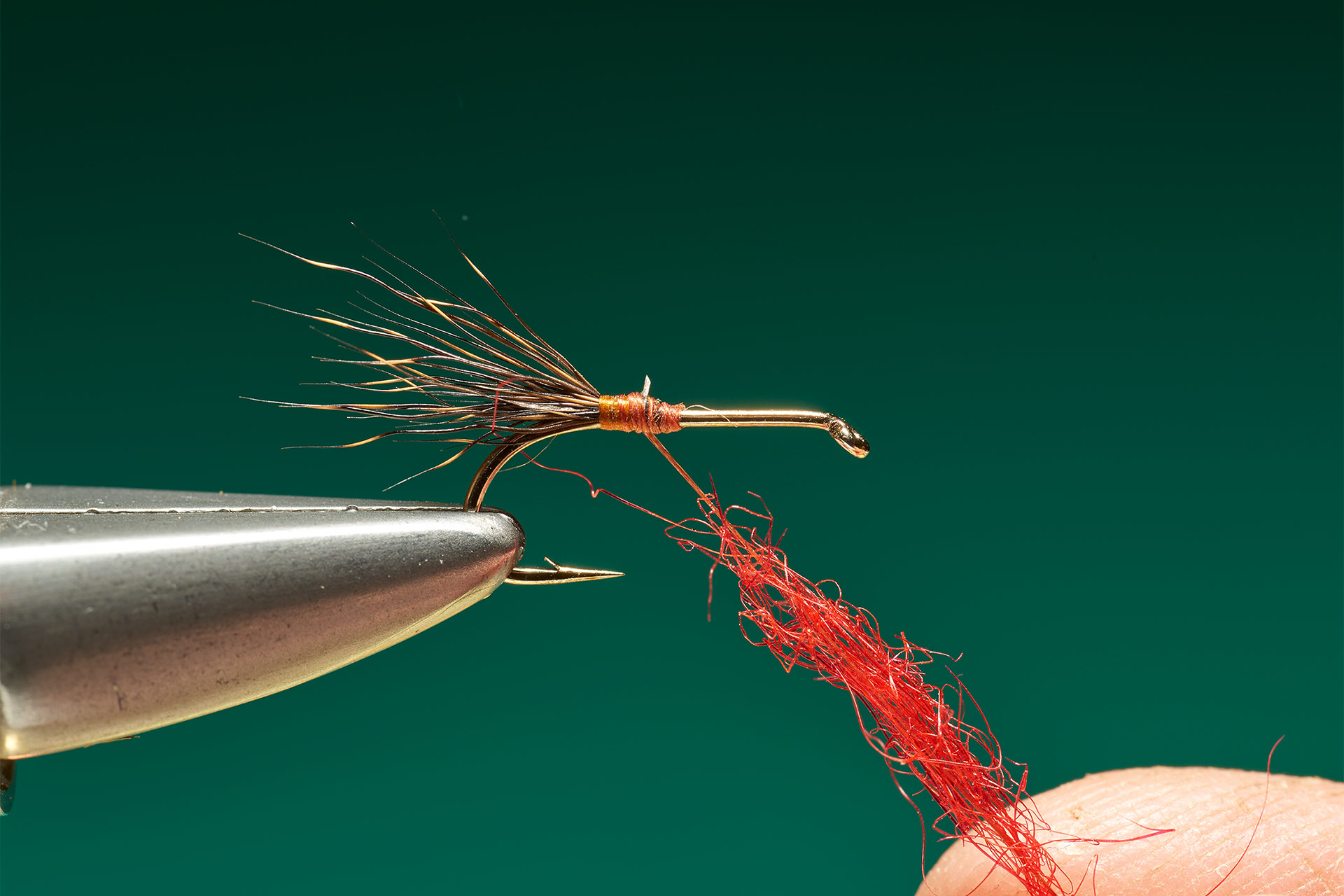 Step 2. Add a few thread turns directly on to the hook shank, then trim off the waste hair ends. With the thread positioned in front of the hair roots, apply a small pinch of seal’s fur in your chosen colour.
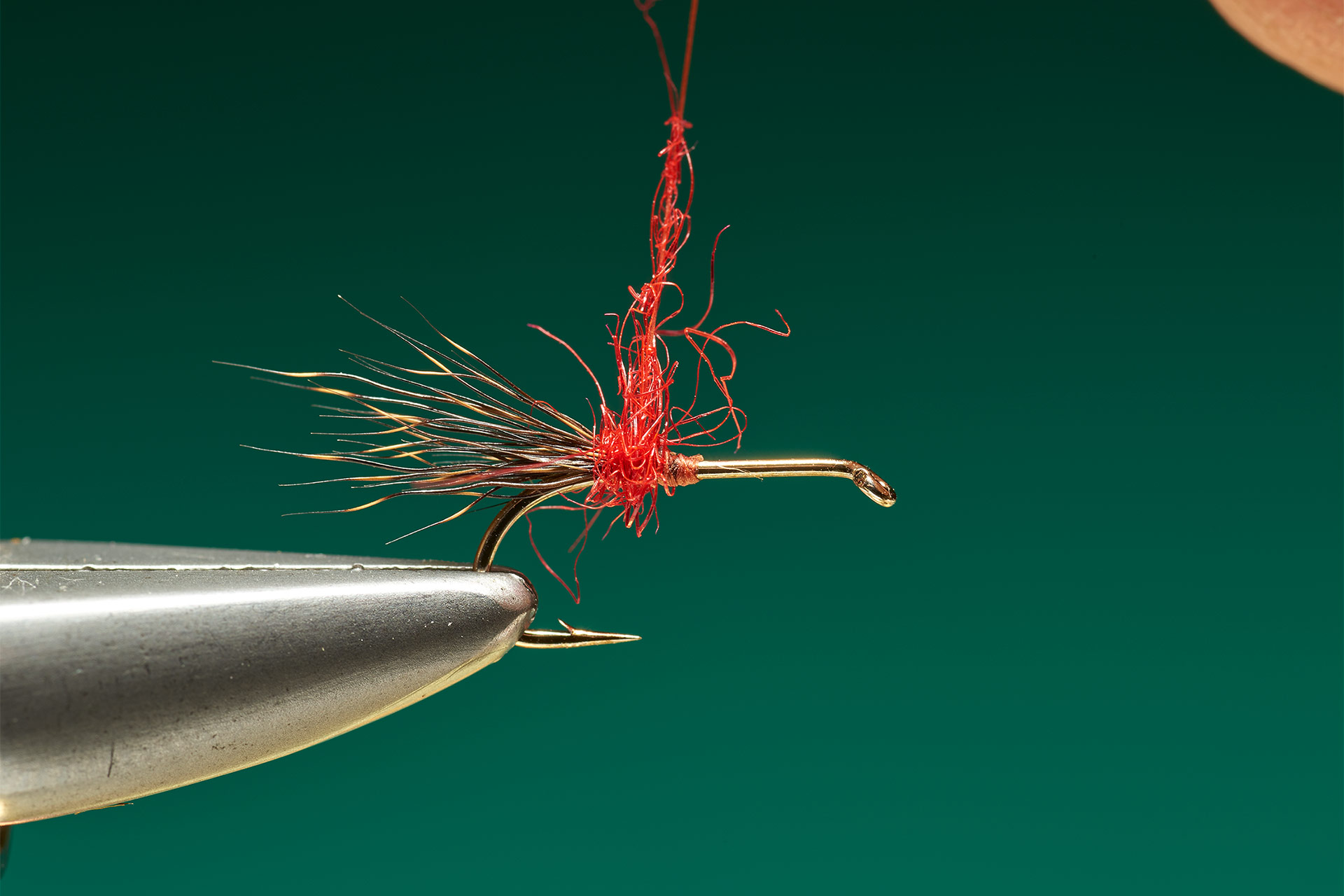 Step 3. Dub the fur on to the thread and wind it over the hair roots. Stroke each turn back over the roots before adding the next, to keep the hair pointing in the right direction.
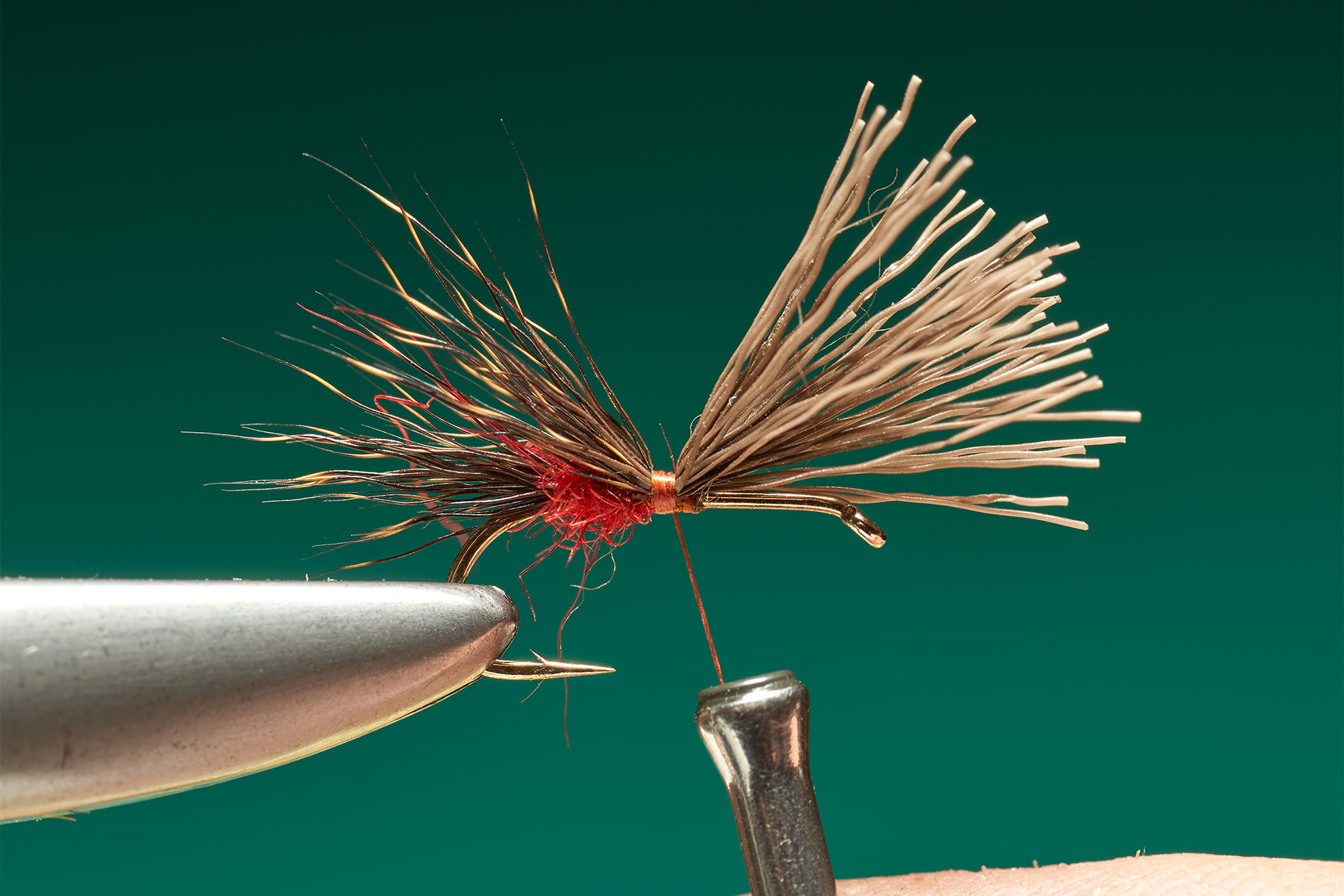 Step 4. Position the next bunch of deer hair immediately in front of the dubbing using a pinch-and-loop, and fix it securely with tight thread turns.
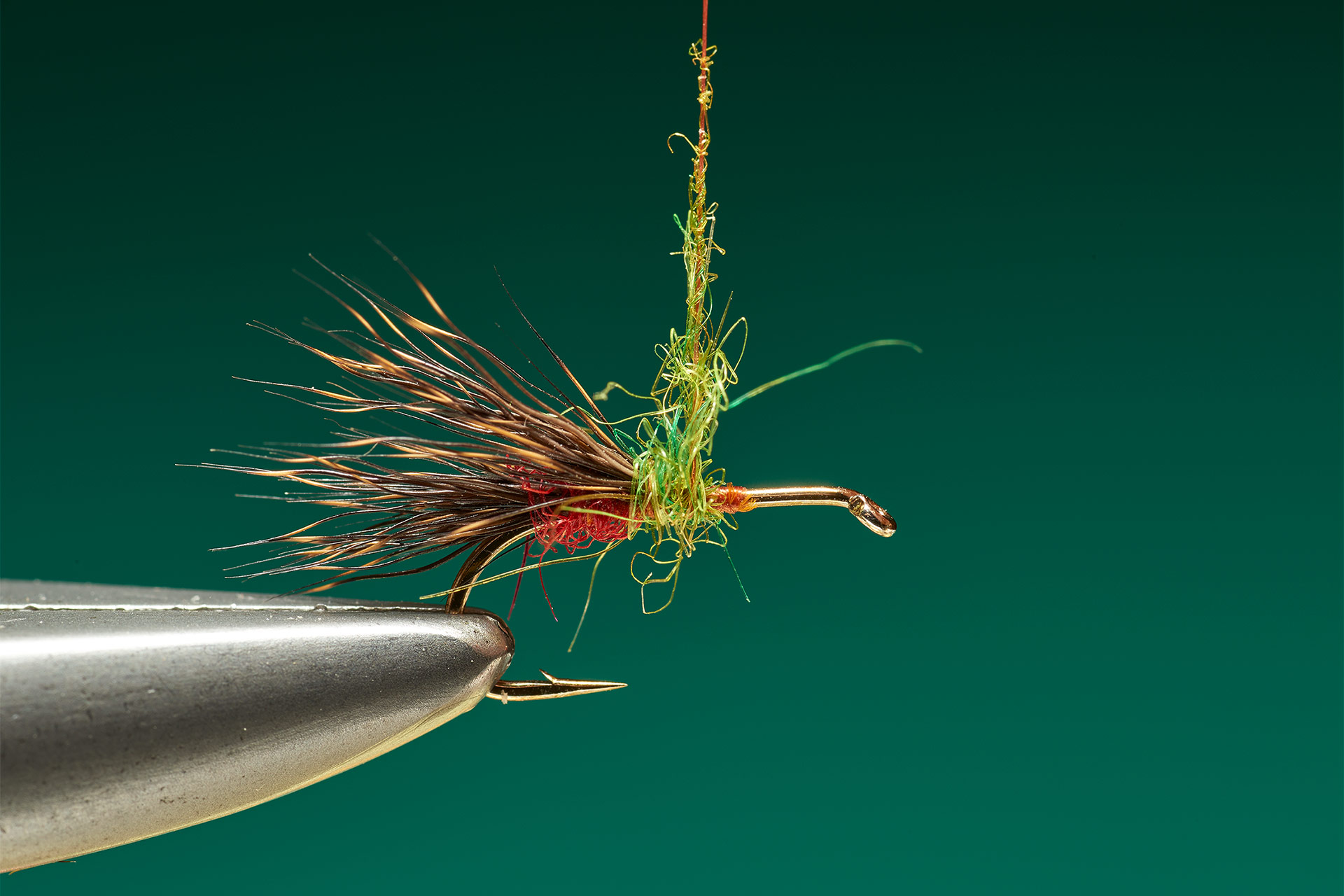 Step 5. Add thread turns directly on to the shank, trim the waste hair, and cover the roots with a small pinch of seal’s fur in your second colour — Green Peter works well here.
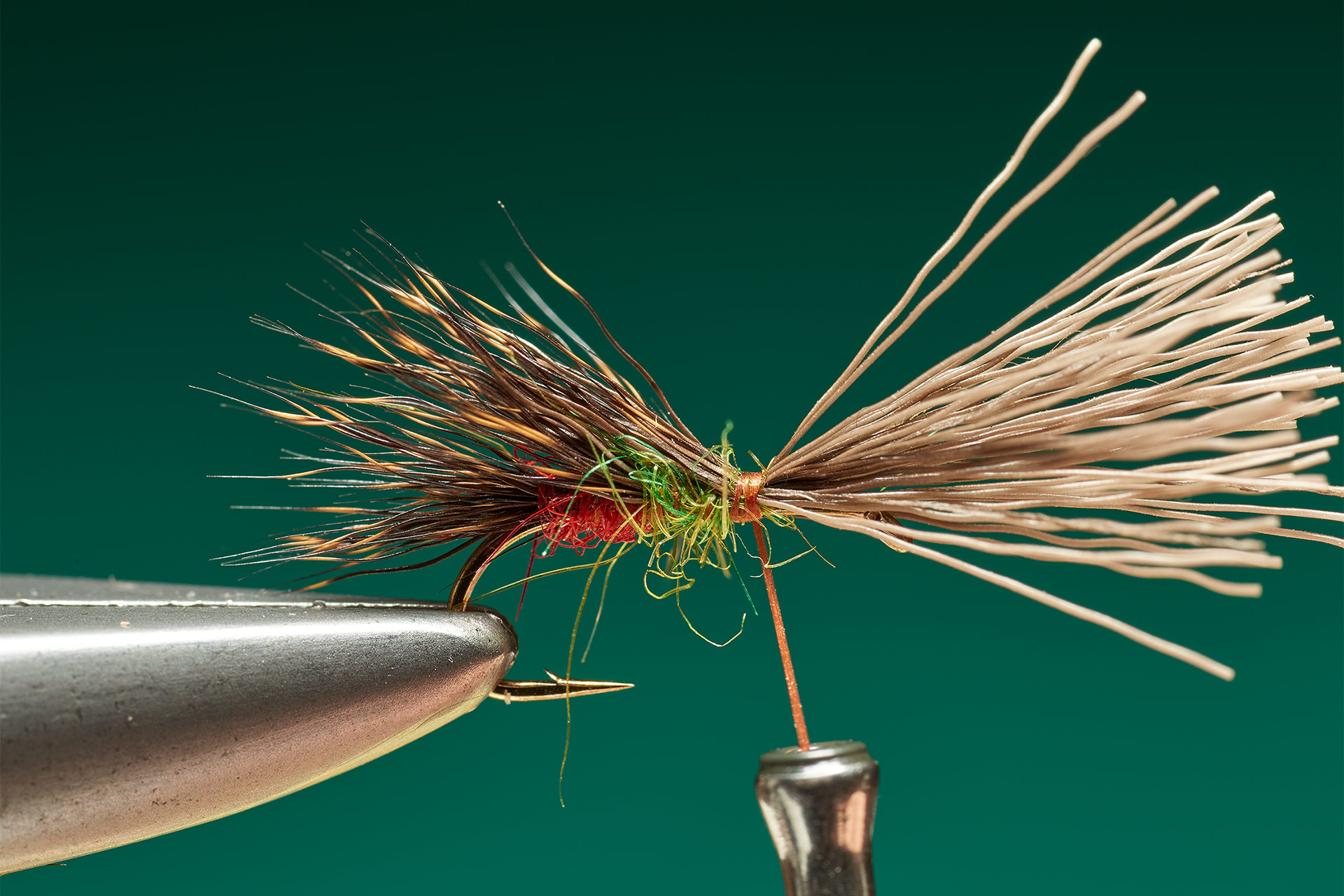 Step 6. Prepare and catch in a third slim bunch of deer hair, with the tips sitting almost level with those of the previous bunch.
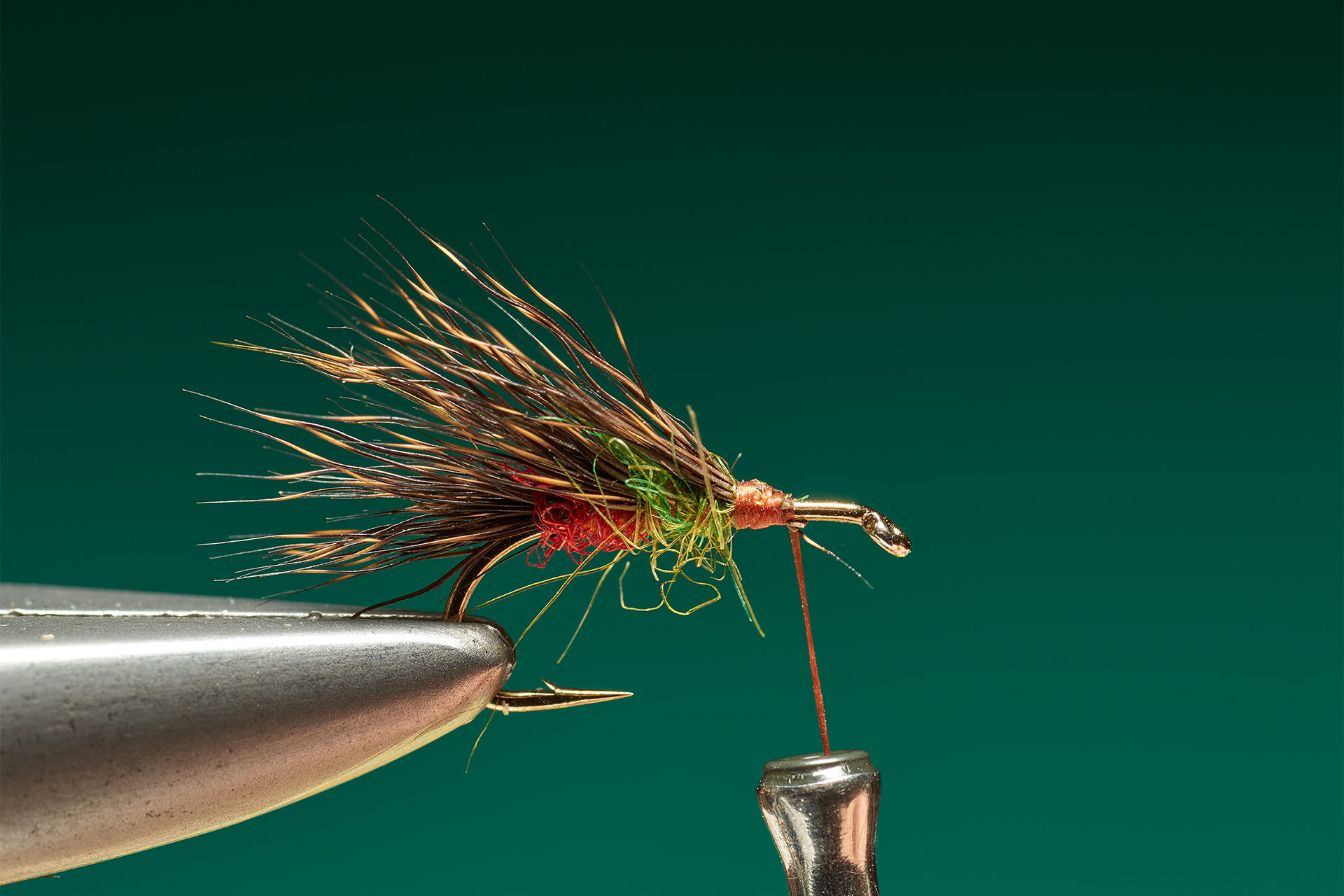 Step 7. Fix the third bunch in place with tight thread turns over the roots, then add a few turns directly on to the shank.
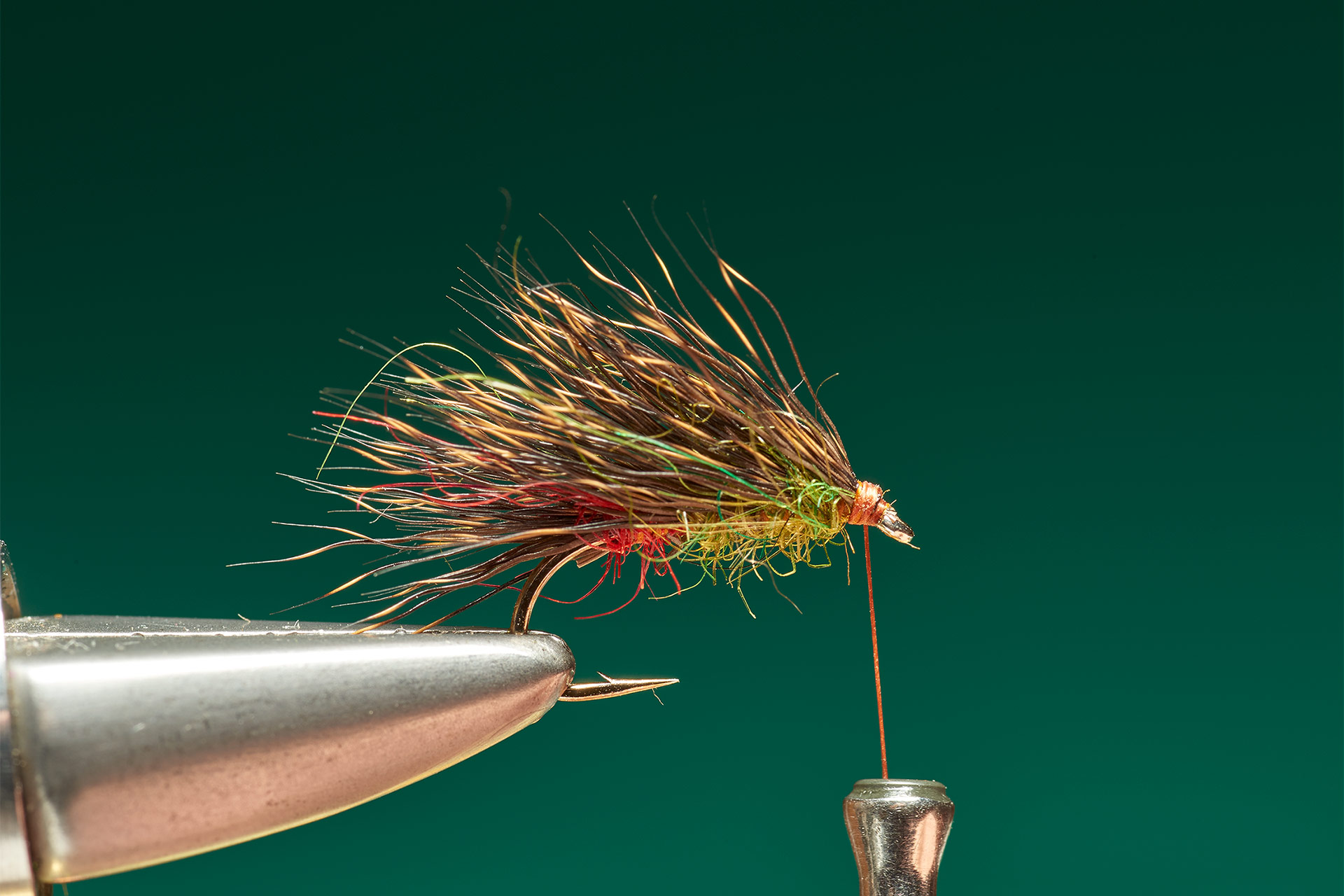 Step 8. Repeat this process until three to five hair bunches have been added, building a full, layered wing. Keep each bunch sparse — thick clumps reduce movement and buoyancy.
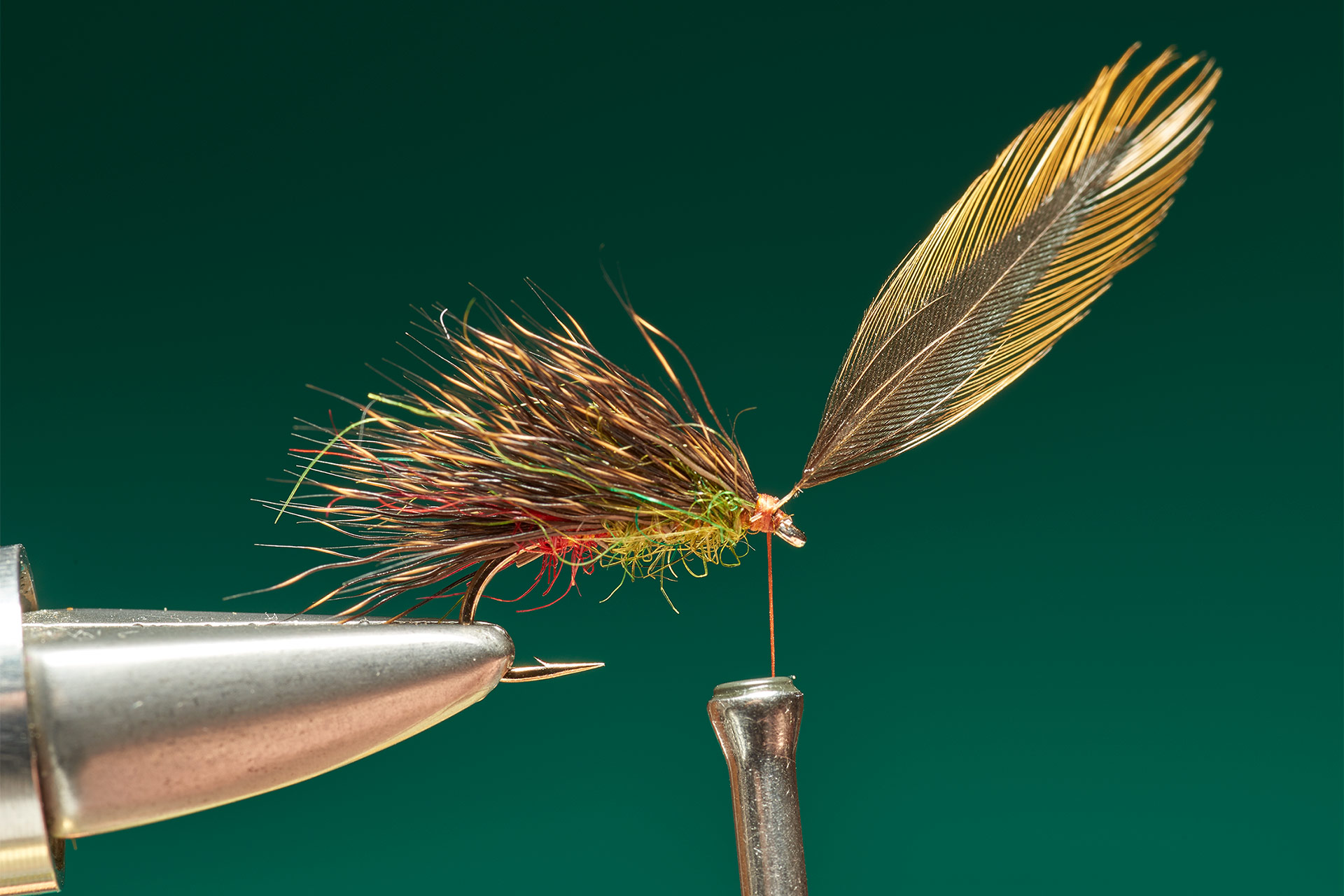 Step 9. Select a light furnace hen hackle and strip the soft fibres from its base. Catch it in, then wind on two turns at the base of the wing.
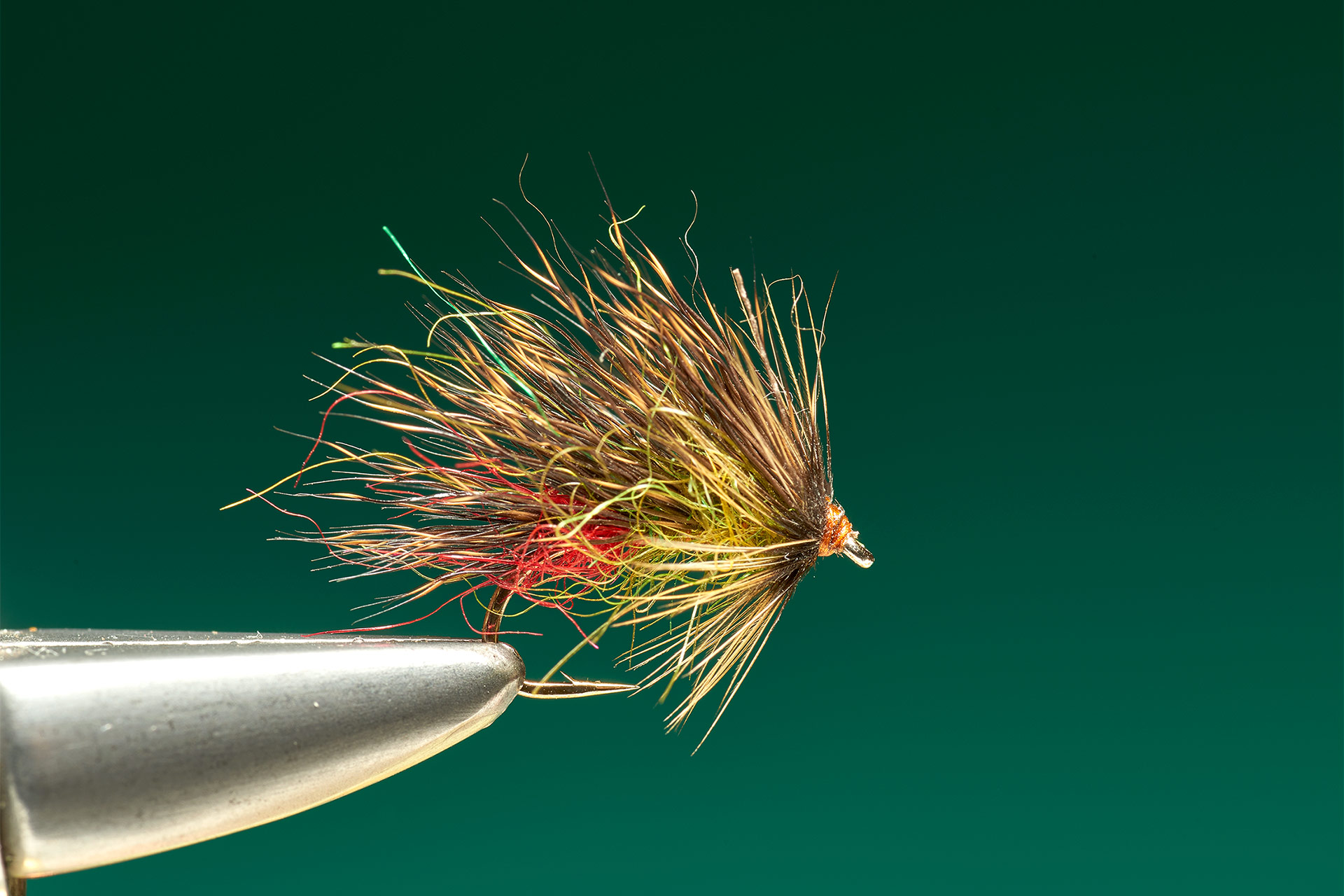 Step 10. Secure the hackle tip with the tying thread and trim off the excess. Add a few more thread turns to seat the hackle correctly, then finish with a whip finish.
How do you fish a Sedgehog?
On a dry line, the fly sits in the film with the deer-hair wing riding high — leave it static and watch for sipping rises, particularly during sedge activity in the evening. On a slow-sinking or intermediate line, pulled back at a very slow pace, it works just beneath the surface and the fly kicks and twitches with each strip.
The pattern works well on both stillwaters and rivers. On reservoirs, try it on the point of a team of three during a hatch. On rivers, the slower glides where sedges become active after dark are worth targeting.
Colour variations worth trying
Although it began life as a sedge imitation, the Sedgehog has proved just as effective in colours suggesting other insects and general food forms. Some productive combinations:
- Claret body: A strong choice for early-season fishing and dull days
- Olive body: Effective when buzzers and olive upwings are hatching
- Hare’s ear blend: A natural, muted tone that works when fish are being selective
- Fiery brown with amber: A warm, sedge-like combination for evening fishing
- Orange body: Worth trying on coloured water or in the last of the light
Blending two colours of seal’s fur on the palm before dubbing — claret and fiery brown, for instance — gives a depth that a single colour cannot match.
Frequently Asked Questions
What hook size should I use for a Sedgehog?
A size 12 wet-fly hook is the recommended starting point. This gives the best proportions for the pattern and is the most practical size to work with at the vice. Once you are confident with the technique, the same method can be scaled up or down.
What is the best body material for a Sedgehog?
Seal’s fur is the traditional and most effective body material. Its coarse, translucent fibres trap air and light in the surface film. Effective colours include claret, olive, hare’s ear, fiery brown, Green Peter, amber, orange and brown — or blend two colours for a more natural effect.
Can the Sedgehog be used as a dry fly?
Yes. The Sedgehog works as both a dry fly and a just-subsurface pattern. Fished static on a dry line, the deer-hair wing holds the fly in the film. On a slow-sinking or intermediate line retrieved very slowly, it works just beneath the surface and creates a disturbance that draws fish from a distance.
What wing material is used on a Sedgehog?
Roe deer hair is the standard wing material. It is tied in as a series of sparse bunches — typically three to five — built up progressively along the hook shank to create a layered, buoyant wing profile. Keeping each bunch sparse is important; over-thick clumps reduce movement and buoyancy.
What hackle does a Sedgehog use?
A light furnace hen hackle is used. Strip the soft fibres from the base, catch it in at the front of the wing, and wind on just two turns before securing and trimming the tip. The soft hen fibres pulse in the water and add to the fly’s lifelike movement.
Related Articles
News
Scottish wild salmon and sea trout catches hit 73-year low
Official statistics released by the Scottish Government reveal that rod catches for both wild Atlantic salmon and sea-trout in 2025 have plummeted to their lowest recorded levels in 73 years
By Hollis Butler
News
TwinPeakes fly-fishing instructors celebrate world title and new qualifications
Two young instructors at the Royal Deeside fly-fishing school, TwinPeakes, are celebrating major milestones after claiming a world casting title and becoming the youngest qualified instructor in the U...